I have no energy for masking at the moment and know that this means I will either appear totally unstable or I’ll muck up everything I have worked so hard to create.
It makes me want to give up as there seems no point.
Situations remind me that no matter how hard I try, how well I mask, and how fantastic my skills are – I am still really crap at being a neurotypical person. But I’m not neurotypical so why does it matter?
Because autistic people are not valued as whole people. My skills can be appreciated but the rest is still measured in deficits.
People assume I want to be more normal, or I’ll somehow learn to fit in. I don’t. I won’t.
I want the whole of me to be appreciated.
I often find neurotypical people dishonest, vague, inconsistent and tricksy. I still love many of them though. I accept I find those aspects of their persona difficult and confusing. I may not even like how they do things sometimes. Perhaps they occasionally annoy me. But I still love them and wouldn’t dream of writing them off as lesser, or as a broken version of me.
We are all perfectly imperfect human beings.
That’s why I’m fed up of being autistic today. I’m tired and overwhelmed and have no fight left. I get more tired anyway because my brain does so much more processing. On top of that I have to put all that effort into fitting in so I’m allowed to have a go at normal stuff like work and friendships.
We are not on a level playing field.
My brain rarely rests. My body is usually alert to danger and ready to react.
Most people don’t realise this, and when I end up having to tell them so they’ll stop unintentionally hurting me, I feel humiliated and reminded of how the world is not designed for me.
That’s why I’m fed up of being autistic today.
So I’m taking it easy. I’m cuddling my dog. I’m taking care of myself and hoping tomorrow will feel better.
Self-care is the only way. I have a capacity for joy that others may never achieve. I seek out those sounds that reset my soul. I notice the patterns the rain is making on the window and trace each tiny droplet until it has my full focus. I read those comments that remind me I am not alone. I move in ways that reminds me I am in here – I have a right to be alive.
I rest, I recharge. I don’t plan my next battle. I remind myself that this neurotypically biased world is not of my making. I look at the birds and the trees and I reflect on the words of Mary Oliver. I remember where I belong.
My dog has just come in and jumped up on the bed to see me – I can smell the weather on her. It feels exciting to be able to tell that autumn is approaching, just by smelling my dog!
We take the same walk every day, down the track and across the field to the little piece of woodland that looks out over the meadows to the distant river and castle. I’ve walked this route for 20 years – either with Blaze, or with my previous dogs. I never get bored of it though, and I take such delight in how it is always a different experience. A good, solid, natural, different experience each time; a difference that is meant to be. Rather than a man-made, enforced, upsetting of the natural order, type of different experience, that makes people think I’m typically autistic and “don’t like change”.
I notice the tiny insects; I hear the far away birds; I smell which animals have passed by. This means I have a whole world open to me that others miss – it is like a great, exciting secret between me and the Universe. It feels special and precious, and an honour. Sometimes my interest and curiosity are stimulated, and I observe and study and wonder at the natural world. Sometimes I just let my senses take it in and I don’t engage my thinking brain at all. The power of my senses gives me respite from the endless mental processing I have to do in order to function the rest of the time.
The physical power of music moves me. I can reset my dysregulated body with just one, single, repeated noise that has the power to rebalance me. I can listen to an orchestral piece and take in the enormity of it, like an overwhelming wall of sound – or I can follow the different instruments, interweaving and passing the melodies and harmonies back and for between them. No tune ever sounds the same twice. Music creates in me something that can’t be captured in words. I see musical chords in colour – and when I see these colours in nature, I hear them in my soul.
My senses work differently to many people’s. I can feel pain and fear from sights and sounds that others find mundane or inconsequential. This can be overwhelming – and other people frequently don’t notice the extent of my suffering. But I can also become overwhelmed by the joy and beauty I discover through my senses. Sometimes I secretly smile inside because I know that I may look calm, bored, or even detached to a casual observer; but in my soul I am full of joy, I am experiencing psychedelic colours; orgasmic noise; and fragrances that cleanse and purge my body and mind.
I can heal my painful and distressing sensory experiences.
I can listen to music; I can walk; I can smell lavender to calm me, or sandalwood to help me think.
I can crunch on pickled onion crisps and allow the astringent flavour to cut through my brain fog and overwhelm – and reconnect me to the world again.
I can listen to the same glissando and allow it to lift my mood, exactly in tune with the rising pitch.
I can move my body so that I know it is me and I am in control and there is something predictable and safe that I have agency over. It makes me be “me” again – I fit back in to the world that so often overwhelms and alienates me.
I am privileged to have a sensory system that can bring me such joy and healing.
Simply put, “video chats mean we need to work harder to process non-verbal cues like facial expressions, the tone and pitch of the voice, and body language” according to Gianpiero Petriglieri, an associate professor at Insead. Paying more attention to these consumes a lot of energy. “You cannot relax into the conversation naturally,” he says.
Many of us will also spend time awaiting calls; ensuring our technology is working; and that there are minimal distractions. This can add layers of anticipatory anxiety and stress to an already energy sapping process.
According to Andrew Hines, assistant professor at Dublin University, and PhD candidate Phoebe Sun; we can improve our video call experience by scheduling shorter meetings. A lot of what determines how fatigued we become is based on what we are listening to.
The voices transmitted through the internet in real time are unedited and therefore crude to our ears. That is why we can wile away an hour listening to a podcast interview but feel drained after a video meeting – even if we didn’t have to contribute.
Their article describes how subtle sounds such as key tapping and swallowing sounds will be captured and amplified through our laptops or other video call making equipment. Squeaky chairs, eating crunchy snacks and slurping coffee can sound to the listeners as if you are chewing in their ears. Our brains respond to annoying, unnatural and unexpected sounds and force us to focus on them. The ability to filter out information is significantly reduced due to the lack of spatial cues and the loss of our ability to recognise the direction of a noise.
Network delays can cause speech; gestures; and meta-communication – all those “Mmmm”, “Uh-huh” and nods of agreement, to become out of synch. Again, this adds to the video call experience being exhausting.
So what has this got to do with autism?
I enjoy writing about shared human experiences. From my very first blog back in March, I recognised the parallels the social impact of the Covid-19 pandemic may have with some autistic people’s everyday experiences.
I am sure that those of us taking part in frequent conference calls will understand the phenomenon of “Zoom Fatigue”. Those of us who are also autistic may well draw analogies with our usual face-to-face social interactions. I’d like to share my personal reflections on this to offer an insight into a world you may not have considered…
When I am in a face-to-face meeting I experience all the same challenges as many people do on a video call:
I cannot filter out background noise or recognise spatial cues.
My hypersensitive hearing causes me to focus on all those annoying breathing noises, the slurping of drinks, and the screeching of moving chairs – with equal intensity.
Awaiting meetings is stressful. This anticipatory anxiety boosts my already high levels of sensitivity even higher.
Eye contact feels overwhelming and painful. But unlike a video call, I can’t slap a post-it note across someone’s face to avoid looking at them!
My brain processes visual and auditory information at different speeds which can cause difficulties and a lag in my understanding.
Knowing when it is my turn to speak takes effort.
Is it any wonder that I am so exhausted after ‘normal’ social interactions? My challenges aren’t because I dislike people, or I don’t understand the rules of conversation. They are processing issues.
What helps is the same courtesy and good humour we have on conference calls. And an awareness that this may feel as clunky, awkward and never-ending to me as many of those video calls do!
Sexual consent is a complex topic. As an Autistic person I find it particularly difficult to define as there is no straightforward, succinct, universal definition that enables me to firmly place A,B, and C into the category of “non-consensual” and D, E, and F into the category of “consensual”.
As a mum, I am doing my best to bring up a child who is as safe as possible from potential mistreatment or abuse, and who understands how to behave kindly and respectfully towards himself and others. As my son entered his teenage years, I recognised just how complicated it is to teach someone “rules” about anything, let alone consent.
I went to the dictionary for my first definition of consent: permission for something to happen or agreement to do something. That is a fair enough definition but leaves far too many questions that my pedantically autistic mind jumps on straight away! It certainly doesn’t take into account the bigger picture where people are duped, coerced or threatened into giving permission to have sex. Or to be touched or touch someone else sexually.
My second definition was from ‘The Code for Crown Prosecutors’ – a public document, issued by the Director of Public Prosecutions that sets out the general principles that should be followed when they make decisions on cases. The definition they use is: Section 74 defines consent as ‘if he agrees by choice and has the freedom and capacity to make that choice’. The Code gives examples and elaborates on issues like conditional consent; intoxication by drink or drugs; and reasonable belief in consent. This felt like a more comprehensive definition to me and includes capacity as well as choice.
In my professional background as a registered social care manager, I have extensive experience of the Mental Capacity Act 2005 and how we assess whether individuals have capacity. The Act sets out 5 principles to consider when deciding if an individual has capacity to make a decision (such as consenting to a sexual act) and only applies to adults. The law is very clear that sex with a child is illegal regardless of whether they have given permission. With adults, there is always an assumption that the person has capacity to consent unless assessed otherwise. The Mental Capacity Act states: “a person lacks capacity in relation to a matter if at the material time he is unable to make a decision for himself in relation to the matter because of an impairment of, or a disturbance in the functioning of, the mind or brain.” Some people may lack capacity on a permanent basis, whereas others have fluctuating capacity that can vary from day to day. This could be because they have a mental health condition or are affected by medication for instance.
When risk assessing situations in my professional role, I have found that supporting Autistic people to take positive risks, where they have the same rights as everyone else to make mistakes or poor decisions, is complex. It can be fairly straightforward to identify sexual risk in a person who is vulnerable because of a very low IQ and severe communication problems that means they are unable to weigh up the information and make a decision. But when I am supporting people who are perfectly able to think through complex problems and access the same pubs, clubs and social events their non-autistic peers do, it becomes more difficult. I know from personal experience that my cognitive processing is adversely affected when my brain is having to process excessive sensory information. (For those of you reading this who aren’t autistic, imagine how it feels when you are trying to think about something important and your partner has their music turned up full volume on the radio – that level of not being able to think straight is commonplace for many autistic people all day every day.)
Many Autistic people need far less sensory input than our non-autistic peers do, for our brain to register the sensation – this means that typical background noise, light, and smells may feel intensely overwhelming. Other Autistic people need far more sensory input – this sensory difference is part of being Autistic. The types of venue where people often meet up to form relationships tend to be overwhelming on a sensory level. Possibly not a good starting point for an autistic person. And this is before we even factor in all the social demands, the reading of body language, interpreting whether someone is interested in you or not, or what you may or may not feel about them.
I’d like to take you back to the 1970s and 1980s when I was growing up. I learned about the biology of reproduction as a child. Like many children, autistic or not, it didn’t really make a lot of sense to me at first but following science lessons at secondary school I had a fair grasp of the mechanics of it and its purpose for reproduction.
It was many years before I appreciated that sex could also be fun, loving, exciting, a mutual experience and a choice.
I learned about something else in a school talk, although it didn’t mention sex at all. This was possibly dangerous and disastrous for many children. We watched a film about not talking to strangers who stop their cars and offer you sweets or visits to their house to see their puppies. I had absolutely no idea this was about sexual abuse at all. I imagine that many children would not have applied the messages of this film across other contexts e.g. someone that wasn’t a stranger grooming them for sexual contact.
I learned the playground language of relationships but had no idea of the meaning of some of the terms. Consider for a moment how Autistic people may have a tendency to interpret language literally. I am well aware that lots of spoken and written language has more than one meaning and I’ve learned lots of idioms and metaphors off by heart. However, I mask my autism quite frequently in order to look like I have some sort of a clue about what is going on! If I didn’t, I’d be asking questions endlessly, and I am well aware this can make me appear stupid, inattentive, or naïve – it singles me out as different. I hesitate to say it makes me vulnerable because it is not my fault that there are dangerous people who choose to take advantage of other people. It is their responsibility not to harm people.
I am less bothered by my communication differences as a middle-aged woman, but as a teenager I had enough problems already without adding to them!
Have a think of some sexual terms for a moment – take a step back from what you know they mean and just think about the words – it is ok to laugh about any potential disastrous misunderstandings!. I’ll give you an example to start you off. Words used to describe kissing someone passionately: Snogging, necking, getting off with, making out, French kissing, smooching. None of these can be interpreted in a logical and literal way to help you work out what you are actually meant to ‘’do”. How do you consent to something you don’t understand? Especially when you are putting so much energy into just working it all out.
Many of the girls at school read teenage magazines, and studied and giggled at the problem pages and articles on how to know if a boy fancies you and how to flirt and so on, so I joined in. This was useful because it gave me some proper concrete information on how to have relationships with boys. I wasn’t interested in having a boyfriend but knew it was a normal part of growing up. I didn’t enjoy eye contact or close physical contact and I struggled to read body language and interpret other people’s emotions but at least these magazines gave me some tips.
I worked on how to flirt and how to tell if a boy was interested in me but unfortunately knew nothing about consent and I had absolutely no feelings towards anyone at all back then. It was a purely scientific approach to ‘getting it right’ and not based on what I wanted for myself. In all honesty I had no idea what I wanted, but was desperate to mask my awkwardness and lack of understanding. I had brief relationships and encounters with boys in order to avoid the scorn of my peers by not fitting in.
Of course, if people are having lots of relationships because they think it is what they ‘should’ do, they run the risk of appearing promiscuous. Peer pressure is inevitable for young people growing up. It is also very powerful – as is gaining a reputation as someone who is promiscuous. Autistic people have told me that they have developed reputations and attracted lots of unwanted sexual interest from others because they are perceived as ‘easy’. Instead of it helping them to fit in with their peers, they have felt excluded, labelled and their self-esteem has plummeted further. It can be common for autistic people to continue doing things in the same way, even if they don’t work. I blame this on our society’s focus on “just try harder”. If I am doing X in order to fit in, and it isn’t working, I need to try harder and do X even more!
NOTE: I was going to edit that last paragraph because my thinking has developed since writing it over a year ago. But I shall leave it as it is because it is good to see how you grow and develop as a person… On the surface it sounds OK… However – I no longer believe the narrative of Autistic masking being about “fitting in”. I have explored this in more recent blogs https://undercoverautism.org/2021/07/09/autistic-masking-lets-see-it-for-what-it-is/
Autistic people frequently mask or camouflage for the same reasons animals camouflage – to avoid predation. I act like my peers in order to not get predated. Or in order to take part. I don’t necessarily want to “fit in” – I want to take part as me – but without being harmed, abused and exploited.
Masking is a topic I have written about elsewhere. It plays a significant part in any discussion about consent. I wasn’t really masking my autism as such. For a start I didn’t realise that my awkwardness and differences were autism. I masked my needs. My need for clarity – by not asking the questions I needed an answer to. I masked my need for sensory regulation – by suppressing any desire I had to intuitively move my body in ways that were calming, soothing or helped me to concentrate or simply feel joy. I copied my peers way of talking and acting in certain situations in order to fit in better – mostly I was happy being a loner with unusual hobbies, I had a strong sense of knowing what I believed in and was interested in, but I also knew that if I looked any weirder than I already did, I would probably continue to be bullied and teased. I felt quite sad that people thought there was something wrong with me. My self-esteem was already low because I knew full well there was something different about me. I tried my best but was frequently bullied. This knocked my self-esteem down further. I tried even harder to get it right.
EPSON MFP image
I will recap on the themes I’ve touched on above and relate them to the issue of consent.
Capacity fluctuates. Autistic people often find the world overwhelming, and the more overwhelmed we are, the more difficult it is to make an informed decision around consent.
Autistic people may take language literally. Any topic that is taboo (sex, death, finances etc.) has lots of euphemistic language associated with it that makes it even more difficult to understand. We may not generalise information very easily and therefore not realise that the ‘stranger asking you to go see his puppies’ is referring to a similar scenario as ‘an adult relative or friend of the family asking you to engage in sexual touching’.
Autistic children may try and avoid standing out as different from their peers by copying behaviour, doing what they feel is expected, or obeying adults.
Understanding body language, subtleties in conversation, flirting and whether someone fancies you is complex and easy to get wrong.
Educating people about consent and how to recognise and avoid situations and interactions where consent may become an issue
I have had discussions with my teenage son about consent and never pushed him as a young child to kiss relatives or accept hugs unless he wanted to. He knows that people may feel under pressure to conform in relationships – either to a partner’s requests, or a peer group, or societies expectations. It is a complex subject with no rules to fit all circumstances. My best advice to others has been, if the situation is not clear cut or you are not sure then don’t do it. Outside of a relationship where you 100% know the consent is there then it is better to regret not doing something than to do it and wish you hadn’t. Consent is about having a choice. If it doesn’t feel like you can choose or the other person can choose, then it’s not consent.
Teaching children to do what adults say because they are adults is not a good idea for anyone, let alone an autistic person who takes things literally. It is difficult to teach rules about sexual behaviour and how to spot potential abuse or grooming activity. The only thing I feel I can do as a parent is to be open and willing to discuss anything with my child.
Sex education needs to include more than biology. I believe that people are at risk because of a lack of the right knowledge about sex and relationships – it’s like teaching someone mechanics and expecting them to not get run over just because they know how a car works.
Sensory processing and consent
I was very vulnerable because of my lack of understanding of sexuality. I knew the facts but knew nothing about the existence of desire as a teenager. Our interoception (the sense system that lets us know how we feel internally) is significant in issues relating to consent. I can’t remember having feelings towards other people as a child, sexual or otherwise. I didn’t like or dislike people. I didn’t look at someone and find them attractive. I knew how to behave appropriately though. I was polite, I did what I was told, I obeyed adults. I also tried to “act normal” around my peers. This coupled with my particular interoceptive processing means I can put a lot of effort into getting things right, rather than considering my own feelings. I have autistic friends whose interoceptive processing works in a very intense way compared to my muted interoceptive processing. They feel sensations intensely and frequently whereas I feel fewer emotions or sensations. They too may have experienced issues with consent. Someone like me may not feel any attraction to another person but go out with them because it is the proper thing to do. My friend may feel attracted towards people instantly and passionately and pursue a relationship or sexual encounter without fully considering if it is what they want.
Our other senses play a significant role too in relationships and issues of consent. People experience touch differently. They may excessively seek physical contact or avoid it. Either of these responses can impact on the ability to consent. The person who needs lots and lots of physical contact in order to register the sensation, may invade other’s spaces or touch them more than is acceptable – there is a risk of them being accused of sexually inappropriate behaviour or being seen as initiating sex. The person who recoils from gentle touch because they need firmer touch may be drawn to sexual partners that are rougher. Other senses play a part too – sex is a multisensory experience. Autistic people often process sensory information in muted or intense ways. None of these sensory processing issues are insurmountable in an established relationship – mature sexual relationships are based on partners being responsive and considerate, the difficulties tend to be more problematic when building relationships or choosing potential partners.
Some people cope with sensory overload by shutting off or zoning out mentally. This may increase vulnerability because their capacity for making decisions about consent is reduced.
How do we help people make informed decisions about consent?
Consent is a difficult concept to capture in a universal definition. Capacity to consent fluctuates too, particularly for autistic people who often have atypical combinations of strengths and needs. Someone may have excellent verbal skills and be extremely articulate and able to problem solve a theoretical problem, but struggle to multitask the sensory, social, and interpersonal aspects of relationship building. On first impressions this person may appear completely able to consent but actually he or she is extremely vulnerable.
Explaining your potential difficulties, saying that you are disabled or autistic may be useful (or not!) for getting help when struggling at the supermarket, at college or in work. It could increase your vulnerability in a potential sexual encounter though. A decent person would understand, back off and take their time. Other people may take advantage of your vulnerability.
Denying Autistic people the opportunity to take risks and make mistakes won’t help them develop skills in learning about what they want from relationships. Open discussions using accurate, frank and honest language with our Autistic children, family and friends may help them explore issues and develop strategies that keep them safer and help them make informed choices. Giving Autistic people accurate and explicit information about sex, where they can ask honest questions without fear of ridicule or exploitation in a safe environment is essential. There are very few opportunities for this sadly.
Teaching people the reasoning behind rules may be more effective than teaching rules. We may hear that “Yes means yes and no means no”. It’s quite easy to opt for simple rules when you are a very rule driven Autistic person. This sounds ok on the surface but actually there are lots of times that yes means no. There are even times when no means yes. It is unlikely that you can learn every variable so asking yourself questions about whether this is something that is safe, is legal, is something you may regret afterwards, can be more effective than rules. And for me, the big question is “do I have a choice?” If the answer to that is no, then it is not consenting. Similarly, if my partner does not have a choice then that is not consensual either.
A difficulty with having a rules-based approach can be the inevitable exceptions to the rule. Think about this scenario… I tell my son that he must never show his private parts to an adult. OK – so what about a doctor? A doctor’s OK. But unless I specify that I only mean medical doctors; that you are visiting specifically about your private parts; in their surgery at an appointment and not anywhere else; etc etc. there will always be exceptions to the rule. Autistic people may struggle to place learning from one context into another context. We run the risk of the “Don’t talk to strangers” campaigns from my youth that failed to mention that most abuse is perpetrated by someone you know – and has nothing to do with puppies.
It is likely that people will end up in situations that they wish they hadn’t. Some people will have non-consensual sex. This non-consensual sex could be in the form of rape (as defined by the legal system), or it could be other forms of illegal or coercive sex. The person may have given permission but not technically consented. They may have felt OK at the time but regretted it later. Some people will encourage other people to engage in non-consensual sexual activity, this could be forceful or manipulative – they may or may not recognise the other person’s lack of capacity. The participants may or may not consider whether they were consensual experiences or not. Both partners may be non-consenting. People may consent at the beginning but change their minds. There are far more complex situations than there are simple “this was right and that was wrong” situations. In my professional capacity I have been involved in many, very complex safeguarding situations. Most aren’t black and white.
The complexity may mean it is difficult to apportion blame. Sometimes the fault is easy to identify. The law and public opinion is clear about particular acts. It may be more productive to move away from blame and fault when discussing consent in the less clear-cut issues and move towards the impact of the encounter. How has it affected the person? What can they learn from the encounter to help them be safer in the future? Feelings of guilt may or may not occur relating to any sexual activity.
It can be said that Autistic people struggle to understand the intentions of non-autistic people. To an extent, I would agree. I may experience this as some non-autistic people being liars, full of hidden meanings and insincere. Of course – this mass generalisation is grossly unfair, and as untrue as Autistic people being perceived as blunt, unemotional and rude. The ‘double empathy problem’ theory in autism explains this well. We can all have difficulties in understanding each other, regardless of our individual neurology, but when people of different neurotypes interact, there can be added dimensions to this.
Autistic people are frequently infantilised. Disabled people are often thought of as non-sexual beings. Social situations can be tricky to navigate because of all the sensory processing, unwritten rules and complex protocols that others seem to intuitively know but we don’t. This all adds up to put Autistic people at a disadvantage when making choices. We have the same rights to make mistakes as anyone else. But we need to be on an even playing field.
It may be helpful for Autistic people to learn assertiveness skills and about boundaries. This can help us advocate our needs and reduce the need for masking. Masking often leads to small issues building up into bigger and bigger ones because our needs aren’t shown, recognised or met. Learning to identify what we want and ask for it effectively can be powerful.
Learning about our bodies, emotions and senses is important too. Having a lifestyle where we regulate our senses and emotions as part of our daily life will help us be in a better place for making decisions and choices. For those of us that have sensory processing issues that impact on our ability to consent – we may need to find strategies that work as an alternative. For me, I don’t feel like or dislike or desire towards people instantly. My interoceptive sensory processing is slow and it can take time to know how I feel about someone. If I was single, I would make a strategy for myself that said “don’t have sex with that person straight away even if they say they really like you. Have a few dates first and find some things you have in common”. My Autistic friend who quickly develops intense feelings for other people may devise a similar strategy “don’t have sex with that person straight away even if you really fancy them. Have a few dates first etc”. It’s up to us as individuals to create the strategies that keep us safe and fit our individual lifestyles and beliefs.
Many of my blogs end with a paragraph about us all being human beings and how we should be kind to each other. This one is no different. It is likely that any of us, autistic or not, will find ourselves in situations relating to consent that don’t go to plan. Before we act, we could think about whether we are about to be kind to ourselves and kind to others. It’s a good starting point for deciding if we should consent or not.
I have had feedback about previous blogs where I explore issues like identity and body image. These topics may be painfully relatable for some people. I’d like to share the following:
No one is ever to blame for sexual activity they did not consent to.
No one is ever to blame for consenting and then later regretting it.
No one is to blame for making mistakes or acting in the best way they could at a time when they only had some of the information they have learned since.
There are many reasons for why we do what we do. If you need help or if reading this blog feels distressing then please reach out to someone.
Our body image is not just affected by the messages we receive from other people, but by our health, life experiences, upbringing, and personal values – and many more things besides.
Body Image has been a topic of concern for many years. We are bombarded with unrealistic images of unobtainable bodies whenever we switch on the television, view advertisements, or access social media.
The image that we form consists of several factors:
How we perceive our body. How thin, tall, fit, or attractive we are. This may be accurate or inaccurate.
How we feel about our body. Do we like how it is and how it works?
What we think about it. Perhaps we think we should be fitter or healthier, or maybe we’re just right?
The way we treat our bodies. How we care for ourselves, whether we exercise, harm ourselves intentionally or unintentionally, our relationship with eating.
Autistic people may experience all the same type of things in life that affect their typically developing peers, and they will be subject to the same media portrayals of ‘perfection’’. In fact, autistic people may be more likely to experience adverse life experiences such as relationships breaking down; employment and school issues; and poorer health outcomes – simply because their particular neurology puts them at a disadvantage. The way each of us perceives, thinks about, feels towards, and treats our body is complex and made up of a multitude of different factors.
I believe there are some additional factors to consider for autistic people. We may be more likely to experience ‘face blindness’ and have difficulties recognising individuals. We often have strengths in focusing intently on specific topics of interest, we may experience perseveration and a reliance on routines and rituals that help us organise our worlds. This could be responsible for some autistic individuals becoming excessively focused on diet, calorie counts, or exercise regimes. It may make breaking habits that are harmful towards our bodies more difficult too. An autistic person’s sensory processing may impact on their body image as well.
From a sensory perspective, I’ll explore my own experiences and reflect on how they have affected my life.
Proprioception
This has a significant effect on my relationship with my body. My muted sense of where the various parts of my body are in relation to each other means I am frequently misjudging doorways and bruising my arms in the process; I trip over my own feet; and I lift and throw with totally the wrong amount of force required. I find negotiating stairs and escalators very tricky, and if I can’t see my feet, I may as well not bother.
These type of proprioceptive experiences are well documented in accounts from autistic people. They undoubtedly impact on my self-esteem. I am not graceful, or elegant; ever. I don’t dance in public, I’m rubbish at sport, and even walking across a room requires the same kind of internal self talk one would say out loud to a blinfolded person navigating the same route! What I think and feel about my body is never particularly positive. My perception of where my body starts and ends is muted too. I recently cleared out my wardrobe and found a coat that I had bought. It was way too big. In fact, it had always been too big and my husband recounted how I have always bought clothes of the wrong size.
The image I have in my head of my size is not accurate. Not just in the fairly typical way many of us look back at old photos of when we were younger and slimmer, and wish we were as “fat” as we thought we were back then. But in a very genuine way where I have no idea whether I will fit through gaps between cars in car parks, or be able to choose which clothes size to try on in a shop. It is not just a self-esteem issue where I exagerate my weight, but a fundamental difference in how my senses work. I have no idea what size I am – and all those other factors like peer pressure, the media, my health and relationships play into an already wobbly body image.
Interoception
Knowing how I feel inside, and which emotions I am experiencing, or what my body is telling me I need to do – eat, rest, go to the toilet, and so on – these sensations are frequently muted too. I don’t know if I like you, I’m not sure if I even like me half the time either!
Until recently, when I looked in the mirror, or at a photograph, I had no strong sense that the image was of myself. I remember as a child thinking deeply about what makes people separate from each other. I must have been around seven years old (because I remember the exact spot in the exact street where this ‘revelation’ hit me) and it struck me that I was everyone else and everyone else was me. I cannot put it into words accurately, but it was an incredibly powerful experience. When I reflect on it, I still can’t quite capture what it was that I had discovered, but I know it is something to do with interoception and identity. I had incredibly clear ideas about who I was – I always did, but they were logical, thought-based, and completely detached from any feeling of who I was. I could have been anyone – where did Emma start and end?
This year I taught myself how to recognise myself. I had already begun a process of reflecting on photographs and noticing in a very mindful way that they were of me. I also built up to the point where I could see myself on camera for the inevitable conference calls the Covid-19 pandemic has forced us to partake in. It was a painstakingly slow process, but I can now watch myself in a short film. Prior to this, I was filled with dread, horror and nausea whenever I saw myself. I could not connect in any way with the image in front of me and I found it terryfying that a stranger was saying my thoughts out loud, or was wearing my clothes.
I have embarked on a process of learning about my interoception. I need to take it slowly. Recognising my emotions and bodily functions as my own, feels as terrifying as when I recognised my outer body as my own too. On both occasions I experienced a massive sense of overwhelm in the days and weeks after my sensory renaissance. A mixture of novel delight, fear, and wonder. Mixed with an almost painful sense of self-awareness. It felt important to gently nurture this and not push myself too hard.
My other senses play an important part in creating my body image too. All of us experience the world through our senses. When acting ‘normal for me’, my brain processes this sensory information in muted or intense ways, compared to typically developing people. When I have additional sensory, social, or cognitive demands to process, my sensory processing can become even more extreme. This means that my world feels inconsistent, unpredictable, and disordered.
The way my brain processes the visual information about how I look varies from day to day. Some days I can smell myself strongly – particularly if I have been unwell or terribly upset. I give off a distinctive chemical body odour. I can frequently hear my heartbeat and the blood rushing through my body. My sense of touch is hypersensitive, and I flinch at a light touch. This makes me upset because it appears like I am rejecting the very people I wish to seek comfort from. All of these factors influence how I perceive my body and how others perceive me. This impacts on how I am treated and how I respond to others too.
No reflection on body image would be complete without discussing food and eating. My gustatory processing works in such a way that I have very particular needs when it comes to flavours, textures, and combinations of foods. I have written about autism and food elsewhere, but in brief, I tend to prefer certain colours of food. I lack the imagination to think up original meals and tend to opt for familiar foods. My sense of taste fluctuates, and I can find particular flavours are so extremely unpleasant my body reacts as if I have been given poison!
My need for routine and familiarity (in order to calm my chaotic world) can result in restricted diets. My anxiety and sensory processing can encourage me to avoid mealtimes. As a teenager, my poor executive skills led to me being disorganised and eating quite a limited diet. This resulted in weight loss and poor health. My energy levels frequently soared then crashed in response to my unhealthy eating patterns. This probably had an effect on my emotions and self-esteem too.
Each of us will experience a complicated mix of factors all interplaying to help influence our body image. Our internal and external body awareness will give us a ‘sense’ of our bodies, and our thoughts, beliefs, and feelings about this will play a part too.
As autistic people we may experience additional influences on our bodies – in the form of our atypical sensory processing, and our need for routine, ritual, and repetition. We may intuitively know how to regulate our senses and emotions too. This may be in uniquely autistic ways. Many autistic people find repetitive movements, sounds, visual images, and other sensory input is fantastic for helping with focus, relaxation, stress relief, and joy. These activities can bring a sense of peace and predictability to our bodies and make them feel ‘safe’ and ‘connected’ to our whole self. This is certainly my experience anyway. Unfortunately, these activities may be seen as inappropriate, or a subject for teasing, scorn, or punishment.
Imagine living in a body that feels clumsily out of your control; that shifts its shape from day to day in front of your eyes; that reacts physiologically to the ebb and flow of a restricted diet and rigid exercise plan; and recoils uncontrollably from flavours or touch.
Go back to my opening questions. Is that body a place that feels safe to you? Is it an ok place to be? When what you ‘know’ doesn’t match what you ‘feel’, because you feel nothing but know everything – are you sure it is even you in there?
Is it surprising that so many autistic people are diagnosed with eating disorders, or self-harm, or are vulnerable to abuse? How do you even consent to another person entering the space of your body when you don’t know where that starts and stops?
“Where’s the best place round here to see badgers?”
“I saw this bird, a bit like a sparrow but different, any ideas?”
“What sort of the poo do you think this is?”
I am frequently asked questions like these, and I’m absolutely delighted that when people have a wildlife-based query, they may think of me as someone who could help.
My knowledge doesn’t just come from having a good memory, and it certainly wasn’t taught to me in school. My passion for the natural world is lifelong and developed from a childhood spent reading – and walking about, noticing things.
I grew up in the days before we could conduct research on the internet, and I spent many hours poring over encyclopaedias, and also reading lots of fiction which seemed to include more descriptions of the specific species of plant and tree than many children’s books do these days.
I have always been someone who enjoys my own company and as a girl I would walk or cycle around the country lanes, sand dunes and beaches in my neighbourhood. I’d horrify my parents by disappearing off for hours on my bike to Brean Down, one of the Mendip Hills jutting out into the Bristol Channel near Weston-Super-Mare. My propensity for tripping over, falling off my bike, or otherwise ending up in some sort of scrape was well-known, and Brean Down was a steep climb with sheer cliffside drops into the sea, and was riddled with rabbit holes, just ripe for twisting an ankle in!
I’d sometimes cycle there at dawn or dusk and dodge the feral goats which stood intimidating tourists as they ascended the steps to the 100m summit of the limestone promontory. And then I’d secrete myself away and keep very still. The Down is a site of special scientific interest (SSSI) and has rare flora like the white rock rose. It’s also a great spot for watching peregrine falcons, kestrels and ravens. But the animals I wanted to see were the rabbits. They were incredibly common and if you sat very still and just waited in the crepuscular light, you would soon find yourself surrounded by bunnies. It always felt an utter privilege to be able to sit near them and a great use of my special ability of being able to blend into the background without being noticed.
This rabbit photo was taken in Gelli Aur Country park back in 2008. There has been a significant decline in rabbit numbers across the county of Carmarthenshire in recent years.
As well as an ability to silently disappear when I need to, I have a remarkable sensory processing system. Like many autistic people, my sense organs see, hear, and smell in a fairly average way. But my brain processes that sensory information quite differently. This means that some of my senses work in a way that is quite muted and requires lots of input to register a sensation, whereas other senses need hardly any information at all to register what is happening. This fluctuates and can become more extreme when I am under stress, worried or having to process lots of information (sensory or otherwise).
An example of where one of my senses may often be muted (or hyposensitive) is in my proprioception – the sense that tells us where the various parts of our body are in space (close your eyes and stick your arms in the air – wave them about – whether your arms crash into each other or not is down to your proprioception). My sense of proprioception is responsible for many of my accidents when I trip over my own feet, misjudge a step, or bump into a doorframe.
On the other hand, my senses may by heightened at times (hypersensitive) – and this too has pros and cons. I can find the noise of a door banging closed, incredibly loud, to the point of it making me jump with fright and my ears hurt. But I can also hear the wasp chomping on the wooden frame of my living room window while it gathers material to mix with its saliva to help build its papery nest.
As well as having particularly keen senses, another trait of my autism is that I can’t filter out so-called ‘unnecessary’ information. I sense everything with equal intensity and importance. This can make me appear ‘lost’, confused or slow when I am in a new environment as I am taking absolutely everything in and trying to consciously work out which bits I should or shouldn’t be focusing on. It makes me a fantastic spotter of wildlife though! I will be the person who notices the Speckled Wood butterfly camouflaged on the woodland floor. My brain will not be fooled into thinking those patterns on the insect’s wings are part of the leafy detritus it is hiding against. My olfactory processing is so sophisticated I can tell whether the repugnant smell of rotting corpse is dead badger, dead deer, or simply a Stinkhorn mushroom.
Not everyone has a sensory processing system that works like mine does, but we can all ensure we take more notice of what is around us when we are out and about, and tune into our sensory experiences.
I have practiced Mindfulness for many years. It comes naturally to me, as I have always been someone who notices things. Being Mindful means, you make a special effort to notice what’s happening in the present moment (in your mind, body and surroundings) – without judging anything. It has roots in Buddhism and meditation and there is good scientific evidence to prove its benefits. You don’t have to be spiritual, or have any particular beliefs, to try it. Mindfulness also sits well with me because my inability to filter things means I tend to be quite open-minded and non-judgmental anyway. I find Mindfulness particularly valuable because it reminds me to take a break from all the classifying and categorising and naming of the natural world, and just be in that moment, noticing it with my senses. Many people find practising Mindfulness is very good for their wellbeing. You can make time to meditate, or simply engage in parts of your normal daily routine in a mindful way.
For people starting out with a hobby like bird watching, or who want to develop more awareness and knowledge of the natural world, I would recommend taking a Mindful approach and just get out there, walk, and notice things. Don’t think about whether you recognise plants or animals, or if you can name them or know what they are. Nature can be enjoyed without any of these things. Try using each of your senses to notice what is happening around you.
Humans are currently said to have eight senses. The five we learned at school – smell, taste, touch, sight, and hearing. Vestibular – the sense of how gravity effects our body (our balance and awareness of spinning and jumping etc). Proprioception – knowing where the various parts of our body are in relation to each other. And finally, Interoception – the sense of knowing how we feel internally (our emotions and bodily functions like feeling hungry, tired or needing the toilet).
Interestingly, other animals have additional senses, and humans share the physiology that enable some of these senses too. Magnetoreception helps migrating birds find their way using the earth’s magnetic field. Thermoreception enables animals to detect heat and forms part of the infrared sensing systems found in some snakes and in vampire bats. Electroreception is well known in some sharks and other fish.
Here are some ways you may like to notice nature using your senses. I believe that with practice people can get more attuned to using their senses and it gives such an added layer of appreciation of our natural world:
Vision – stand still and notice how many different species you can see. Don’t worry about recognising them. You may be surprised at how many different living creatures you are sharing your space with at any given time.
Smell – notice a smell and move about until you can find the source of it, notice where it gets stronger or weaker. If you find something really smelly, like honeysuckle or even fox poo, focus on the aroma and then notice how far away from the source you can get while still smelling it.
Hearing – pause and notice how many different sounds there are. Let yourself notice each one. There may be sounds in the foreground like your breathing or footsteps, as well as sounds further away like birdsong, or a nearby road. Notice any background noise like the wind or water.
Taste – if you are confident at safely identifying wild food, then enjoy a blackberry or other fruit. Otherwise, practice with fruit and veg in your garden.
Touch – feel how cold the water in a stream is. Notice how things that look similar, may feel different. Find white clover and red clover in a field. Stroke the stalks of each and notice how one is hairy and one is smooth – you will forever be able to impress others with your knowledge of clover identification even when there are no coloured flowers to give the answer away!
Vestibular – close your eyes and notice whether you can sense if you are at sea level or much higher up.
Proprioception – bring your attention (without looking) to various parts of your body and see if you can notice where they are. Let the feel of the ground under your feet and the air against your skin help you notice where the respective parts of your body are. Realise you are part of the natural world.
Interoception – notice how you feel when you are in the natural world. Does it bring you joy, curiosity, peace?
Not only does following a technique like Mindfulness help us relax and connect with nature by disconnecting with the stresses and strains of our busy, daily lives, it helps us recognise how much is going on all around us all of the time. Once we start recognising this, it is more likely we will notice those elusive badgers, otters or whatever else we hope to spot. I have genuinely seen people walk past the most incredible creatures because they have been so focused on their phone, or their conversation, or lost in their own thoughts.
As well as practicing noticing things, its worth studying and learning all you can too. I bought my very first nature book whilst on a caravan holiday as a six or seven year-old. I remember going into the book shop in Williton, on the edge of the Quantock Hills and using my holiday pocket money to buy a copy of the Usborne Spotter’s Guide to Animals, Tracks and Signs. This is my favourite Spotter’s Guide because it opened so many doors for me. It wasn’t just a simple identification guide that helped name the species I was lucky enough to spot, it taught me the craft of getting up close with nature by understanding it.
Here are some of my favourite pages:
Gaining knowledge of how animals live, as well as what they look like, increases your chances of spotting them. Habitat, diet, and behaviour are all important parts of this. Understanding these helps identify animals and plants too. It increases the likelihood of seeing them when out and about. Consider my trip to Brean Down to watch my beloved rabbits. I knew that they would be out at dawn and dusk – I understood their behaviour. I knew there would be a warren on the isolated headland – I understood their preferred habitat. There was plenty of grass for them to eat – diet. Rabbit poo is decidedly easy too spot and correctly identify. My rabbit spotting trips are an obvious example of using knowledge to increase your chances of seeing a wild animal, but the principle is the same for other animals too. Though it provides no guarantee of a sighting!
Otters are a favourite animal of mine, but have frequently eluded me, despite my extensive knowledge. I now live within walking distance of otters and I’ve been out before dawn, I’ve set my camera trap up, I’ve even photographed their footprints, and smelt them. But my only local sighting was a chance encounter in a pond, rather than in the river where I know they live.
These tips that I’ve given about studying animals can act as a useful checklist for ensuring correct identification too. Sometimes we may spot a creature or plant that we are unfamiliar with. It is very easy for wishful thinking or past knowledge to affect our judgment when trying to identify it. My tip is to jot down exactly what you see. This is where another of the advantages of my autism comes in. Sometimes autistic people are labelled as great with the finer details but not good at seeing the bigger picture. Personally, I would disagree with this. I am very good at seeing the bigger picture – but I make it up out of all the tiny bits. This takes time and if you are after a quick answer before I’ve processed all the individual pieces into an overall scene, then you may wrongly assume I haven’t seen the bigger picture at all. My ability to appreciate every aspect of the world without judgment also comes into play – that lack of ability to filter information I described earlier. Autistic people are often “bottom-up thinkers”. The American scientist, Temple Grandin describes:
“I’m good at trawling through the Internet through vast amounts of journal articles and then pick out what are the really important things. I then synthesize all of this resource down into one short paragraph… That’s something that I’m good at doing… I’m a bottom-up thinker—I take the details and put them together.”
Suppose you see a bird that you can’t name. Very often people will tell me they have seen a brown bird that was probably a type of sparrow. They hand me the bigger picture information, and this is usually followed by a time consuming and tricky process of me asking lots of questions about things they haven’t noticed. Whereas, a person who describes small details accurately, helps me identify the bird much quicker, even when there are key bits of information missing. A member of a Facebook wildlife group I set up, reported seeing a bird she didn’t recognise – and with only a handful of very specific details I could identify it instantly, show her a picture and have the id confirmed. She described it as thus: Cornish coast, size and shape of a tit, black head and wings, white collar and under wings and a reddish underside. It was in July. I pieced these bits of information together and knew what it was straight away.
Stonechat
I used the visual information and then checked off whether the following were likely: habitat – coast, and time of year – summer, location – South West England.
Checking the likelihood is always important – a Golden eagle in the skies above Wales is almost undoubtedly a buzzard.
A cuckoo seen in the winter is probably a sparrowhawk, like this one that took a blackbird down in my garden back in the winter of 2010. The cuckoo is a brood parasite that uses its resemblance to a sparrowhawk to frighten away the parent birds when it is hoping to lay its eggs in their nest in the spring.
When birds look very similar, like the curlew and whimbrel, you can use your knowledge and senses to help with id. If you listen, whimbrels make a rapid tittering of very short whistles, whereas a curlew’s call has a much more ringing tone and the male in displaying flight in spring has an almost liquid sounding song that crescendos into a bubbling trill. UK based whimbrels only breed in Northern Scotland and is only seen elsewhere in the country as a passage migrant in spring and autumn. It can take off and fly from a standing start, whereas a curlew will take a run at it. Although side by side, the beak length is a giveaway, it is unlikely you will ever have the luxury of seeing that, so understanding how they behave helps.
Of course, we must always be careful of how we interpret things and remember that all sorts of creatures can turn up in odd places – like the Tregaron golden eagle, or the bearded vulture currently roosting in the English Peak District. Vagrant, escapee, albino, and hybrid animals are frequently spotted. Whilst this can feel exciting for some bird watchers or nature spotters, the outcome is rarely positive for the animal – a raccoon dog (tanuki) was destroyed in Carmarthenshire only last week and I still feel distress at the hunt killing an albino stag in Somerset where I grew up.
On a lighter note, Bill Oddie tells a story about identifying a bird, that reminds me that even when using common sense and a bottom-up approach, you may still be surprised: Bill’s friend works for the RSPB and received a telephone call from a lady asking for help identifying a bird. He gleaned information about the bird’s buff colouring, and the bit of black and a bit of red on its head. This bird had been feeding at her bird table. The RSPB chap considered the information, matched it to the most likely suspects, and confidently told the lady it was a goldfinch. But she was not in agreement at all! He asked her to describe what the bird was doing, and she explained that it was stood by the bird table pecking at seed. He enquired whether it was able to reach up and get the seed, and the lady informed him that this large, heron shaped bird was actually stood next to the bird table and was leaning down pecking at the food. The bird was not a goldfinch – it was a crane!
Its not just the behaviour and appearance of the creatures and plants that we see that can help us identify them, the relationship between species is significant too. Take the stinkhorn mushroom and badgers for instance. I explore their relationship in another blog: https://offdowntherabbithole.org/2020/01/26/badgers-and-the-devils-fungus/
When I smell a stinkhorn, I look out for signs of a badger sett or other badger activity like a latrine as the two species are frequently found near each other. If I am on the Ceredigion coast looking out to sea for dolphins, I’ll scan the skies for feeding seabirds. These may indicate a shoal of fish and dolphins could be close behind them. I was listening to a dunnock outside the doctors’ surgery this week. This small, brown and grey bird had a most beautiful song that suddenly turned into a short staccato cheep-cheep-cheep. This type of noise is an alarm call used by lots of different small birds. I knew it wasn’t me that had alarmed it, we were both well aware of each other and keeping a safe distance. So I looked to the sky, and lo and behold, a buzzard had started to circle and soar above the carpark.
The signs that animals use a local area may not be obvious, but if you keep noticing things with all your senses, then it is surprising what you may find. Here are some photos from my walks…
Lots of broken empty snail shells indicate this is somewhere a bird like a thrush or blackbird could come to smash open snails.Lots of feathers on a log like this indicate a bird of prey comes here to pluck whatever it has caught to eat. This is in woodland so it is probably a sparrowhawk.I knew where a fox lived so set my trail camera up. Capturing a still photo of it catching a bird in its mouth was a stroke of luck.
I recommend finding a local wildlife patch that you can visit and get to know at different times of the day; in different weathers; and across the seasons. If you use all your senses to notice your environment, I guarantee you will never ever get bored of what you find because no two visits will be the same. Take photos; learn what the plants are and have an educated guess at which butterflies and birds they may attract and see if you’re right! Learn all you can and enjoy going off down those internet rabbit holes researching whatever takes your fancy. As for equipment, buy the best you can afford. But remember, equipment is no substitute for noticing and learning. I deliberately leave my phone, binoculars and camera at home for at least one of my daily walks. I realised once when I felt disappointed because I didn’t have a camera to record something, that I was beginning to digress from what it is about the natural world that brings me such pleasure. Similarly, I do not need to name or classify every species I come across – I take an awesome pleasure in knowing that for that moment, it is just me noticing whatever it is, and that makes that moment special and never to be repeated.
Get out there and have some moments!
This is the first of my blogs to be featured in both my wildlife and my autism blogs. If you’d like to check out my other blog, please click below…
When I searched the internet for a quote that would capture how autistic people experience emotion, I found plenty of search suggestions along the lines of, “Do autistic people have emotions?”. I wanted to get away from the popular type of search results that frequently reinforce stereotypes of unemotional autistic people so went for something a bit more academic and science-y.
There was plenty of research on autistic deficits and research questions were posed about whether empathy can be taught to autistic people. I also found other research into why autistic people don’t experience emotions.
I cannot honestly say that I felt ‘uncomfortable’ – my emotions don’t work like that. But my very logical mind began matching all these search results I was turning up, against the reality of my own lived experience of autism, and the realities of my peers, family, and clients. It just did not fit!
I “know” that autistic people experience emotions and in diverse ways just like everyone else.
So, I decided to see what the NAS had to say (The National Autistic Society – a well-known UK based organisation). They made a few mentions of autism and emotions in various sections of their website, typically in relation to challenging behaviour or emotional difficulties.
Overall, the perception online seems to be that autistic people may not experience emotions, or they may experience them in out of control ways.
Initially I disagreed with this.
However, after reflecting on this all day, I realise that “yes, we can look like that to people who aren’t able to empathise with us”. I personally believe that non-autistic people struggle with empathising with autistic people just as much as autistic people struggle with empathising with them.
This blog is my contribution to the discussion. It describes how this topic works for me. It may not be relevant to everyone else, or even anyone else, but if it creates an interest in what autistic people may be feeling under the surface and a willingness to explore this with them on their terms then great!
I went off on a wonderful tangent looking for a clear definition of what an emotion is. I discovered articles about the philosophy of emotions and the history of emotion too. I found there were evolutional and theological theories of emotions, and all manner of schools of psychology, neurobiology and sociology that added to the discussion. There is no simple definition – the subject is complex and broad and there seems to be no scientific consensus on a definition.
Most simply put, emotions are states associated with the nervous system brought on by all manner of different things, including our thoughts and behaviour.
Currently there are eight senses associated with humans. The five we probably learned at school: sight, smell, taste, touch, and hearing. The two associated with knowing where our bodies are – proprioception; and the effect of gravity on our bodies – vestibular. The eight sense is interoception – the sense of knowing how we feel. This includes feeling emotions and feeling bodily sensations like needing the toilet or hunger.
For me to describe how my emotions work, we need to consider my overall sensory processing.
My sense organs work fairly typically. My eyes are very short-sighted, but my vision is corrected with glasses. If an audiologist examined me, they would probably say that I have no issues with my hearing. My sense organs take in information in a fairly typical way. However, once that information reaches my brain, it is processed very differently to that of my typically developing peers.
Sometimes I need more information than most people need, in order to register a sensation – I like a full-strength hug not a gentle one for instance, or I can spin on a roundabout without feeling queasy.
Sometimes I need extraordinarily little sensory information to register the sensation – I can hear conversations in a room down the hall, and a door slam sounds as loud to me as a firework does to my neurotypical friend.
And this is where I would like to introduce you to the eight sense: interoception. It works just like all the other senses. It is not responsible for making emotions or affecting them in any way – just like the ears are not responsible for the noise they hear. Our interoceptive sense enables us to notice or recognise or be aware of how we feel.
If the way our brain processes sensory information is muted in so far as interoception is concerned, then we may not feel emotions, or the need to go to the toilet, or that we are hungry or in pain. If the brain processes the sensory information too intensely, then we may notice every sensation within our bodies, or feel emotions more strongly than other people do.
And just like all our other senses, our interoceptive sensory processing can work differently in different circumstances, or on different days.
Here are some ways that a person who experiences atypical interoceptive sensory processing may appear to an outsider, with my thoughts on what may be happening on the inside:
Doesn’t show emotions (maybe they are having emotions but not noticing them?)
Over-emotional (maybe that emotion genuinely does feel that strong to them?)
Loses their temper for no reason (perhaps they didn’t notice the sensation of becoming angry until it was too late to manage it?)
Moans about every tiny ache and pain (maybe their ‘tiny’ ache feels as painful as someone else’s broken leg?)
Doesn’t notice they have a severe tooth infection (perhaps the pain hasn’t registered with them?)
Won’t learn toilet training even though a reward system is used, and they fully understand what a toilet is for (maybe they can’t feel the sensation in their body that tells them they need to go?)
Has no empathy and doesn’t care about anyone else (maybe they don’t know how they feel themselves, so can’t imagine how others may feel?)
Blunt and insensitive – poor social skills (perhaps they have no personal concept of how unpleasant it feels to be spoken to abruptly?)
Easily led, vulnerable, promiscuous– forms relationships with anyone who asks (maybe if they don’t know if they ‘like’ people, they will politely become anyone’s friend?)
Perhaps autistic people ARE having emotions but just aren’t feeling them? No one would say that because I don’t feel hunger I shouldn’t eat. My care givers would be seen as neglectful if they didn’t feed me just because I never noticed I was hungry – food is a basic human need – everyone must have it.
So how about we look at emotions in that way too? Just because I don’t feel sad or show that I am sad, doesn’t mean I can be ignored when something sad happens. To deny me the compassion shown to my more typical peers following a tragedy, is as neglectful as denying me food just because I’m not hungry.
My personal interoceptive experiences tend towards the ‘needs a lot of input to register’ aspect of sensory processing. Growing up, this gave me the appearance of being aloof, disinterested in people, unemotional and cold. On a good day, I could appear strong, brave, and steadfast.
As an adult, I can still be interpreted in this way but I’ve learned to play to my strengths and there are times when the ability to remain calm in a crisis, keep a level head, and make objective decisions under pressure pose an advantage over my more typical peers.
When I was a girl, I knew I was different. I thought I must be a terrible person for being how I was. I remember despairing over my lack of ‘normal’ emotional responses and wondering what was so very wrong with me. Deep down inside I knew I did care and that I was kind and thoughtful (and my goodness, am I thoughtful – I cannot do anything without thinking it through in full first!) but somehow my experiences, my thoughts and my emotions seemed out of synch with each other.
I can remember experiencing traumatic events that would have made any normal person cry or feel distressed and I felt nothing. And not just because I shut off to those experiences. To my young self I wondered whether perhaps I was somehow to blame for these things? Surely I must want them to happen if I’m not even upset by them?
And like every other human, I am more than a product of my genes and neurology. My experiences naturally shaped me and added to the way I experience emotions. A complex cycle was created: My autism affected the way I behaved in response to sensory information; and thus influenced how others treated me; which then influenced my further responses; and so on…
My interpersonal relationships were different to the relationships between my more typical peers. I struggled to develop the skills that would enable me to relate to others with ease. I didn’t feel things like other girls did and I didn’t act like other girls did. I tried my best to copy and pretend sometimes, but on the whole, I was content being self-contained and kept myself to myself, lost in my own world of music, books, and nature.
I was labelled as unemotional and eventually believed that meant I must be uncaring too. Perhaps I was kidding myself that I was alright really? Perhaps my knowledge that I was fundamentally ok – just different; was wrong?
I feel it is important to recall at this point in the blog, that other autistic people may have the ‘doesn’t need much sensory input to register’ type of interoceptive sensory processing. They may empathise with others so intensely it hurts them. You will see how different we all are, but by viewing our emotional responses as a result of our sensory processing it may make more sense of why that is.
At this point, my blog heads off into a little discussed phenomenon. It helps me explain my emotional responses but is my opinion and nothing more. As I learn more about myself, autism, and the complex science of emotions, my opinion will likely change. This is how it makes sense to me at the moment, based on the knowledge and experience accessible to me at this current time.
Synaesthesia is a perceptual phenomenon in which stimulation of one sense leads to an involuntary experience in a second sense. It is widely documented throughout history.
For me, the acidic green of newly opened beech leaves is the colour of the musical chord A minor. C major is sunshine yellow, G minor is matt aubergine. I only see chords in colours not individual musical notes.
My ability at mental arithmetic comes from my experience of single digit numbers as coloured shapes – I can visually click them together to do sums very quickly.
Synaesthesia explains how some of my other senses experience information that was not intended for them. Hearing in colour is a common example. It comes close to explaining my emotional responses.
I’ve described how I believe I actually do experience emotions, but I don’t always feel them or show them. Just like I may not feel hungry, but my body still needs food. As I’ve developed a greater understanding of myself, I recognise that in fact I have more awareness of my emotions than I realised.
As my self-awareness has developed, I have noticed what happens in my body in response to different stimuli. When I have tried to explain this to some clinicians, their response has not always been accepting, or even inquisitive. Very often my descriptions were interpreted as a symptom of mental illness – delusional in fact. I would prefer to see my emotional responses as a form of synaesthesia rather than my “brain not working properly”. Here are a few of the many examples of emotional synaesthesia that I have experienced across my lifetime. Remember – the emotion is there just like it is for every human, but my brain processes it differently due to my muted interoception – which means I may not feel the emotion in a typical way. This processing sometimes appears as synaesthesia. My sensory processing is frequently muted or over-responsive anyway, but these examples are outside of my ‘normal’.
Sadness – my vestibular processing is affected, and I can feel extremes of seasickness when changing direction or speed on a walk; or fail to become dizzy when spinning at high speed.
Shock – vision becomes pixelated.
Happiness – colours get brighter – especially green, that’s why I love nature.
Stress – vision becomes distorted and objects lose their definition.
Tiredness – hearing becomes painfully acute.
Very sad – food tastes gone off.
I have started viewing these signs of how my brain is processing sensory information as “my” emotions. They are consistent enough that if someone were to ask me how I felt, I could confidently give them the name of an emotion that would match their neurotypical expectation of my experience. This helps them understand and helps me get compassionate responses from people. But it bugs me, because it’s a lie! I don’t feel sad, or happy, or stressed, necessarily at that time.
As practitioners we often support people to identify and name their emotions in order to help them get their needs met more effectively – my account is worth considering whenever we do this. Wouldn’t it be lovely if when someone asked how I felt, I could honestly say ‘seasick’. And they would know me well enough to appreciate that my seasick was the same as their sad. That would really help meet my needs.
I mentioned a key phrase back then; “I don’t feel sad, or happy, or stressed, necessarily at that time.”
I have always been aware of this out of synch relationship between my emotions and thoughts. If I need to process what other people would define as an intensely emotional experience, I can analyse it to the point of understanding it at an almost atomic level, but it will still rotate around my brain for years and not lay down to rest. The emotions can’t be forced. I am no more able to tap into emotions now than I was as a young girl.
I don’t see this as a problem anymore. This is how I roll! I am better able to process experiences now that I accept my atypical way of feeling those emotions. When I experience an emotional event now that I understand and accept the way my emotional responses work, I can still analyse the event to gain clarity and process it cognitively. I can also acknowledge that my sensory responses are ‘normal for me’ and nothing to be scared of or view as a mental health relapse indicator. I don’t give myself a hard time because I’m not feeling what I should be feeling. Sometimes I get the feeling much later anyway.
A recent example is of a bereavement that I experienced in November 2019. My initial responses were logical, practical and helpful. My sensory responses were visual disturbance, taste disturbance and hypersensitive hearing. My initial feelings were frequently related to the frustration of my ordered world becoming disordered through the loss of a key figure in it. I may have appeared unemotional, brave, strong, distant, or inappropriate. In June 2020 I felt sad and I cried for the loss. It properly hit me what the loss meant.
The worse thing about feeling emotions in this way but in a delayed manner is other people’s responses. I can look like I am not coping, or attention seeking, or struggling. Everyone else has moved on from these emotions, just as I am arriving. What I would have loved last month more than anything, is to have had the warmth, compassion, love and sympathy shown to me that was shown towards the people who were grieving like that in November. I appreciate that’s not how these things work, but this was a delayed response not a maladaptive one. Frequently I have not received the support I need from others because my timing is wrong or I have hidden my needs because of how it will look if I bring things up all this time later. Can we be kinder human beings I wonder, by giving people what they need, when they need it – even when it doesn’t fit in with our expectations of timing?
I could have explained exactly how I experience the world from the moment I could talk. In fact, I frequently did! The trouble was, my world, and my normal was not the normal of my typically developing peers. In the 1970s and 1980s, autism wasn’t really mentioned – and certainly not in relation to girls – particularly those who were academically bright and able to just about pass off as normal enough to get by. Well, normal enough for adults to not have too many concerns. My peers on the other hand could spot my autism a mile off! Neither they, nor I, knew there was a name for this – we all just knew there was something fundamentally different between the way I experienced the world and the way they did. No amount of masking my autism or trying to fit in was convincing enough to others to prevent them from noticing, and deep down inside, I always knew there was something different about me too. It took many years and many misdiagnoses to find out what that fundamental difference was called.
There are pros and cons of having a formal, or medical diagnosis of autism. For me, I already had some diagnoses. I disagreed with many of these, or felt they didn’t describe the full picture. I needed to get the right label, to slap firmly over the incorrect ones. For others, a diagnosis is not necessary or needed, or even wanted. I can’t say a diagnosis in itself, has opened up support or opportunities, or in any way practically advanced my life, but for others it certainly can. However, the freedom to accept myself following my diagnosis has changed my life. Deciding to seek a diagnosis is an entirely personal choice and I believe that anyone who looks at the diagnostic criteria or listens to an extensive range of first hand autistic experience and honestly thinks to themselves “that’s definitely me” is autistic. A formal diagnosis is a label or description of something that is already there. Good people who always accepted me remain good and accepting. People who didn’t listen or even try to understand, remain unchanged.
My diagnostic assessment was based upon the DSM-5 criteria. (The Diagnostic and Statistical Manual of Mental Disorders.) My thoughts on whether autism is a mental disorder (it isn’t) or whether an assessment based upon deficits is the best way of assessing whether someone is autistic (it isn’t) are irrelevant in some ways. This is the standard way of assessing Autistic Spectrum Disorder and getting this changed is a battle for another day. I will use this blog to look at the assessment criteria and describe what is going on for me when it comes to each of these manifestations of autism the clinicians look for when making a diagnosis.
The particular ways I demonstrate my so-called deficits aren’t that important. What is important is that people understand the diverse range of ways autistic people show or hide their autism. I will explain what is going on underneath the surface of some of my presenting behaviours. Each autistic person is different so I speak only for myself.
Criteria A
I have learned how to understand people and situations and have tried to study and find a script for every possible scenario that may happen on earth. This is clearly impossible and also extremely exhausting. I have learned to script conversations in my head and I am constantly second guessing what may happen. I understand body language – I can use my hands to add emphasis to a point I am making, I understand which words are appropriate to use in which contexts, and I have lots of stable and respectful relationships – but only within very strict frameworks like relationships with colleagues or family, where the boundaries are clear and expectations are laid out up front. Put me outside of my comfort zone where I have no script or framework with rules to refer to, and I struggle big time.
Of course, trying to take my scripts from one context to another doesn’t always go smoothly – no wonder I may use stereotyped speech or avoid social situations. As a child I would appear incongruously grown up for my age and talk like an adult. This was like handing my typical peers a double edged weapon to hit me with. Not only was I weird, but adults thought I was very grown up for my age too and my peers assumed I was showing off. Both things were worthy of teasing, bullying or disdain. Responses that further hindered my ability to interact with others and ate away at my self-esteem. I’ve got quite clever at using my scripts, I know how to add variety and ask open questions so that people talk about themselves. I can see patterns and go for a close match in conversation, rather than repeating the same conversation I’ve already had with someone. This has helped me build relationships and the more comfortable I am with people, the less self-conscious I feel. I don’t need to put as much energy into getting it right, and the conversation begins to flow naturally sometimes. Learning things in this way means I can give and take in relationships – it may feel clunky or robotic at times but is my best effort.
I’m certainly a caring person, so why the problems with emotional reciprocity? My interoception – or knowing how I feel inside, is frequently muted. The processing speed of my emotions is typically very slow. Have a read about my experience of empathy, it will explain this in more depth.
When I am having a conversation with someone, I am concentrating hard to understand what they are saying, to read their body language and work out the correct response. If this is someone I don’t know well or who uses lots of sarcasm or vague language, I have additional processing to do. I don’t get a gut feeling about things, I have to use logic to work things out. Very often I don’t really know what I like or dislike. This means that if someone tells me something about themselves e.g they experienced an accident, I know that I should say something sympathetic and not just ask lots of questions to seek clarification. But do I actually feel anything about their experience at that point? Well, no.
Later on, when I have had a chance to process what they told me, I can begin matching their experience to my own experiences to see what I think and feel about it. I might think then that their accident sounded awful and I may consider how I would feel in that situation. In my head I am looking for a pattern to match their experience to so I can understand it and say the correct thing in response. Too often, I get this wrong and what I believe is empathy, actually looks like I am making it about me and invalidating the person’s experience. Or it may look like I am not genuine, because my emotional response is delayed. I did ‘feel’ bad about the aforementioned accident, just so much later it would have looked weird if I had shown it.
This means it is often easier to avoid relationships because they are hard work. I don’t come across like typical people. I can offend people or appear to be self-centred or only interested in my own hobbies. I know this and try my best to not be like it, sometimes it’s easier to just avoid people rather than get it wrong. Not having a sense of liking or disliking things and people means I don’t necessarily get a lot of reward from relationships.
Small talk is tricky. It is full of statements that are not meant to be taken literally. “How are you?” is not meant to be answered honestly. To play along with the rules of small talk feels wasteful and dishonest to me. I appreciate it is part of what neurotypical people do to make their social interactions work – I view it a bit like when animals ‘play’ but are actually practicing asserting their dominance or place in the pack. I don’t really know why it is valuable in humans when they have the self awareness to just get on with being honest and not play games – it is not valuable to me. I would rather get straight to the point. It is like the foreplay of relationship building though, and by finding it difficult and avoiding it, it means I am less likely to get to the stage where relationships feel meaningful. The meaningful relationships I do have tend to be long lasting, loyal and strong. I have no difficulties with them at all.
Social interactions are also affected by my sensory processing. Eye contact in particular, involves masses of visual processing. My tactile aversion is triggered because if I am close enough for eye contact, I am probably close enough for touch. My sensory processing works very differently to my typically developing peers. If I am having a conversation, I will be consciously processing all the aspects of social contact I have just described, as well as the smell of the person; the sounds I need to focus on and the sounds I need to ignore; plus my proprioception and the need to stand or sit still, use my body appropriately to make the correct gestures, and adapt my tone of voice.
I may give the impression that I don’t socialise much because I don’t like people – not true. Or because I don’t understand how to interact – definitely not true, I probably understand it better than many people. I can’t see where the deficit actually lies. In fact, maybe it isn’t a deficit – I am genuinely having to process much, much more than neurotypical people have to process when interacting socially. No wonder it’s difficult!
Criteria B
I have touched on why I may be repetitive, and also on how my sensory processing is very different to that of my typically developing peers. When you begin to understand how my brain processes sensory information and how some of this is muted, and some of it is so intense it is painful, or so distorted it is not recognisable as being like that of my peers, you may get a feel for how challenging my world is to live in.
My need for predictability and routine becomes easier to understand. Rituals bring an added sense of control and familiarity, and repeating routines enables me to have some sense of being able to influence what is happening inside and outside of my body. My world is not predictable – my sensory processing fluctuates depending on how much I am having to process externally – e.g. in busy environments. Or internally – e.g. an illness I may not be feeling, or bodily functions I have to mentally search for in order to notice. Repetitive actions in themselves may feel very regulating or soothing to my senses, which is why I do them more when feeling under pressure.
Others may view my reactions to sensory input as hyper or hypo reactive. Believe me, my reaction is perfectly proportional to the reality I am experiencing! My unusual sensory interests are perfectly normal to me. I find it unusual that other people don’t hear music in colour or are so preoccupied they miss all the beautiful tiny details in nature that I see, hear and smell.
I am able to focus on subjects that interest me with an intensity that many others don’t possess. My lack of interest in what I perceive as an unnecessary focus on hierarchies and conformity in society, means I choose whatever it is I like to be interested in with an open mind, and frequently approach the subject in an innovative way. My interests provide me with consistency, predictability, and an escape from the stresses and strains of life. They enable me to be good at something in a world where I am frequently seen as deficient. They are a safe ‘go to’ when I need to place my mental energies somewhere.
Criteria C
Pretty self-explanatory – and a good test for anyone considering whether they are autistic or not. My autism was present before any of the other factors that shadowed me getting the correct diagnosis.
Criteria D
My functioning is impaired when I am in environments or communicating with people that are not accommodating of my autism. I thrive when I am in environments where my needs are met. My autism is exactly the same, I haven’t suddenly developed social ease or typical sensory processing. Of course, a medical diagnosis will be based on the medical model and not a social model of disability or illness. I always process the world in an autistic way. How big a problem this is depends on more than just me. It is up to you too.
Conclusion
Receiving a diagnosis has been positive for me. I understand my life experiences, challenges and strengths much more realistically. I feel able to be myself and I have more confidence. I hope that autistic people are listened to more readily, so that future diagnostic criteria for autism focuses on authentic autistic experience, and not just on how this looks to non-autistic people.
The examples I have given are my own personal ones. If any autistic people wish to add their own examples to the comments section, I would love to read them. Every person is different. The diagnostic criteria is based upon the manifestations of a person’s autism when it is observed in a non-sympathetic environment, or by professionals working within a system which views their own particular experience of the world as normal. I find the focus on deficits hurtful. I have spent a lifetime feeling deficient – and now its official! I don’t view myself as defective, and neither do other people who know me. Whilst the medical focus is on what autistic people can’t do, progress towards acceptance and understanding of autism will be hindered. And certainly there is no way of truly valuing us. I do not believe it is as simple as turning the deficits approach to diagnosis into a strengths based approach. I do struggle with things. We do live in a world where the majority of people are not autistic so that will inevitably mean I am different. Every autistic person will have different strengths, in the same way as they have different challenges. We are all unique. In the future, I would like to see clinicians developing an understanding of “why” and not just “what”. This will ensure that people who slip under the diagnostic radar due to their ability to mask their autism or who don’t fit the stereotypes will be able to be taken seriously when contemplating a diagnostic assessment.
I was diagnosed by clinicians who understood “why”. Their approach towards me was compassionate and interested. I was not made to feel deficient. I am not convinced that all clinicians understand the “whys” behind an autistic person’s presenting behaviours. Please share this article with whoever you feel needs to read it.
I had never heard of this phenomenon until last year. I was having a discussion with a professional who works on the local NHS Autism team, and she asked if I wanted to have a look at a questionnaire about camouflaging and masking. I thought why not, and promptly set about answering the 25 questions. I emailed my response back and was delighted to hear I had scored really highly on all areas! “Well, I’m clearly not as autistic as I thought I was, I knew I’d get a high score because this is all obvious stuff that everyone does all the time. See I’m as normal as the next person”. I thought to myself.
But…
My high score wasn’t because I’m not that autistic, in fact it indicated that I mask almost all of the time and this is a very common experience in autism. I was beginning to feel uneasy. I had realised I was autistic by then but wrongly assumed the ‘autism spectrum’ people talk about was a linear thing with mild autism at one end and severe autism at the other. I would probably be a little bit autistic – because I work, I have a family, I function well enough to convince most people I’m normal. And I’ll forget about all that other stuff; the never fitting in, the always knowing I was different, the misdiagnoses and failure to reach my potential – that’s probably all because I’m just such a crap person! Of course, it is not like this at all – you can no more be mildly autistic that you can be a bit gay, or slightly pregnant. The spectrum is a collection of different elements, aspects and strengths and every one of us who is autistic, has their own unique combination of these. And everyone that isn’t autistic is not on the autism spectrum.
The questionnaire was scored in the areas of compensation, masking, and pretend social ease. Until this point, I had assumed everybody pretended to be normal all the time. I realised that some people were more ‘normal’ than others, but I had no idea that there was even such a thing as masking. I still cannot comprehend how neurotypical people operate in terms of social interactions, so watch out those of you who know me, I plan to find out and will probably question the hell out of you!
Types of masking.
There are lots of different ways autistic people cover up their autism and its worth having a read of other people’s experiences . I’ll touch on three elements of camouflaging and my choice of terminology has no great thought behind it and is not a definitive explanation – to be honest, much of the language used in research and accounts of masking feels a little judgmental to me – it suggests ‘normality’ and deficits :
Compensation – this includes all the tricks and tips I’ve taught myself (and others) over the years. The techniques for making realistic eye contact by looking at the person’s mouth instead of their eyes. I had the added bonus of having regular investigations and treatment for hearing problems as a child, so my lip reading was positively encouraged. A few years ago, I considered writing a book for autistic people about how to get by in life. I had worked as a manager of a residential service, with a woman who had been in the care system since childhood and had a whole host of psychiatric and behavioural diagnoses. I supported her through assessment for Asperger’s (as it was known back then) and when it came to my work appraisal she wrote some feedback that said “Emma is really good at teaching me the tricks of the trade”. I was delighted at this – not least for the compliment, but for her accurate use of complex language. In fact, I was the one who said to my line manager “What do you think she means by that Karen?”
Masking – this includes hiding my distress, confusion, and difficulties whilst pretending all is well. I have spent my life feeling as if I have been winging it, and I am often only moments away from making myself look totally stupid by asking a question that everyone else intuitively knows the answer to. The further in my career I have gone, the more I have had to mask. Every time I hear a new piece of business jargon I have to look it up so that I can keep up with the conversation. I have to suppress my need for clarity and my desire to blurt out “Why are you talking such utter nonsense?!” But pretending I know what is going on isn’t always helpful. I’ll give you one of my embarrassing moments:
I was sat in the board room in a very serious meeting and the person talking used the phrase “the elephant in the room”. Now, I absolutely knew this was not to be taken literally. An alarm went off in my brain that said “idiom/metaphor/figure of speech alert”. So I used my quick thinking brain to whiz through everything I knew about elephants to try and work out the meaning. Elephants are big – are they talking about something that is big? Elephants have big ears and a trunk – no it can’t be to do with that and stop it Emma, do not go off on a mental tangent about the different types of elephant and their respective physiology. Elephants never forget – aha, maybe it’s to do with memory or remembering something. What else do I know about elephants?….And then the question came: “Do you have any thoughts on that Emma?” And I realised that I hadn’t got a clue what was going on, or what the question was, and I couldn’t even grasp at an answer out of thin air. The conversation had moved on and I was lost in the world of Proboscidea. I was probably the only person in the room with the taxonomic knowledge to name the order that elephants, mammoths and mastodons sit in – and I was probably the only person in the room feeling stupid, anxious and lost! And all because I didn’t want to make myself look stupid for not understanding something. I challenge you to spend a day in your workplace or school considering how complex language is if your default setting is to take things literally.
I also mask my need to move about or do anything that ‘looks’ autistic. I find moving is very regulating, it helps me concentrate, focus and come up with ideas – all the sorts of things employers and teachers encourage. But it would put me in the firing line of ridicule, misunderstanding and people would assume that there was clearly something wrong with this otherwise bright and articulate woman who can’t keep still and behave ‘properly’.
Assimilation – I never felt like one of the girls at school but I knew my life would be easier if I pretended to be like them. I learned about boyfriends by listening to what other girls had to say and joining in the conversations as best I could. I was not attracted to boys at all as a teenager and I wasn’t attracted to girls either. I learned the language of relationships but had no idea of the meaning of some of the terms (‘getting off with’; ‘blow job’ etc). You’ve read how my brain works when I described the elephant in the room – go figure! Many of the girls at school read magazines and studied and giggled at the problem pages and articles on how to know if a boy fancies you and how to flirt and so on, so I joined in and copied. This was useful because it gave me some proper concrete information on how to have relationships with boys and made me appear to have something in common with my peers. I wasn’t interested in having a boyfriend but knew it was a normal part of growing up. I worked on how to flirt and how to tell if a boy was interested in me but unfortunately put so much energy into ‘getting it right’, I never considered consent or whether I wanted to go out with them. I can’t remember having feelings towards other people as a child, sexual or otherwise. I didn’t like or dislike people. I didn’t look at someone and find them attractive. My sister covered her side of our bedroom with posters of pop stars and my friends talked about boys they fancied and got excited when certain actors were in films. None of this did anything for me at all. I bought a small photo in a frame of George Michael in Speedos, because Wham! were very popular back then and I knew it would be easier if I said I liked someone. The photo sat on my bookshelves whilst I lived at home and was my attempt at fitting in and somehow feels a rather ironic choice now – gay and dead! RIP George x.
I assumed everyone masks. I know for a fact that my old line-manager swears her head off outside of work but was always totally professional within her role as a director. I know that it would be rude and feel hurtful if I replied honestly when someone asked if I thought they looked good in the item of clothing that I thought looked dreadful on them. I know that you cannot go through life being impulsive and doing and saying whatever you want at the expense of others. So isn’t masking something we all do?
I’d argue that it is not. Those things are the normal day to day, not being an asshole type things we do because we are sharing this planet with each other and need to get on. Kindness is essential, even if it is frequently overlooked and undervalued in our society. Kindness comes first for me. If I choose the kind option then it may mean I modify my behaviour or instinctive response. I may need to hold back and rephrase my honest response into something diplomatic and kind – but I can still be true to myself and be honest. Assertiveness is a good way of being true to yourself because you still meet your own needs but also meet other people’s needs too. I will compromise my behaviour but not my values.
So what is different about autistic masking?
Quite simply. The cost.
Masking your autism always comes at a price. And I have paid with my mental wellbeing. The costs are twofold. The direct mental health costs of camouflaging are exhausting. Whilst I’m concentrating on getting my eye contact right, I’m using valuable capacity that could be used for answering the question or thinking. And the continual anxiety of whether I’m getting it right wears me down emotionally and cognitively. The indirect costs are things like low self-esteem from getting into all sorts of scrapes while pretending to be normal, and not feeling sure of who I am and whether I am an ok person or not, as I feel I’m living a lie.
It erodes my identity because I’m not sure which bits of me are truly me. If you ever share doubts about your identity with mental health professionals, it can indicate various psychiatric conditions and personality disorders. Misdiagnosis of autistic people is common and once a label has been given; every trait, behaviour and experience may be interpreted as part of that labelled disorder – this further erodes the sense of identity and creates a sense of being damaged or ill. It also creates a sense that you can somehow get better and recover. Autism is not an illness and recovery is not going to happen. Living a fulfilled and valued life can happen though, but in my opinion is unlikely to whilst you perceive yourself as broken and needing to be fixed.
The knock-on effects of mental health treatment can further affect your wellbeing. Stigma, discrimination, and side effects of medication are just three of the many ways this can happen.
Another effect of masking is that you don’t regulate your emotions or senses when you need to. All those times I stop myself from moving about to regulate myself, I stay dysregulated. All that energy that goes into keeping still or not reacting to whatever it is that is causing me to become overwhelmed further increases my distress. And no one knows. That is a serious issue because if no one knows how distressed I am until I absolutely have to show it by either falling apart or completely switching off (some people would describe how they experience meltdowns or shutdowns) then I will look like I overreact. I struggle to identify and verbalise what I am feeling anyway and if I am hiding what my body is telling me I need to do to feel better, no one can ever help me. Also, the idea that so-called ‘high functioning’ autistic people don’t do all those autistic things is reinforced – which is unhelpful and inaccurate. The same is true of not asking for clarification, or time to process information – my needs go unnoticed and therefore unmet.
Regular masking means you may never learn decent coping strategies because no one knows you are not ok. Then when something happens in life that is difficult, traumatic, or distressing, you have no idea how to cope.
Should I take off my mask?
Or even could I? Or do I want to? Yes, I would like to be more “me”, but that doesn’t mean going about my day impulsively and insensitively doing what I please or saying whatever comes into my head. I have a choice in much of what I do. I do not have a choice in how my senses work or how my brain processes information. I will react strongly to a loud noise because my body and brain think I am in danger and no amount of me telling myself otherwise will change that. I will take things literally, or not be able to read between the lines sometimes. I do have a tendency to be honest and upfront, and my brain will opt for the honest answer every time, regardless. I cannot choose how I react to all of these things and sometimes other people need to be more understanding and patient. Where I can choose how to react, then I do my best. Or if I’m having a bad day, I’m a pain in the backside – just like everyone else can be!
I have been very fortunate in having a career where I have had some excellent mentors, role models and line-managers. I trained to become a registered manager by taking part in a scheme where I had placements in a range of different care services under a number of different managers. I used my excellent skills at masking to observe, analyse, copy, and practice the management styles in each placement and gradually hone them into my own style that worked for me. This is where my ability to mask has been a huge benefit. I wasn’t doing it to disguise something, but rather to try out what worked for me so that I could become a good leader myself.
So I don’t necessarily need to stop masking. On occasion it can benefit my mental wellbeing because it enables me to learn skills that are good for my personal development. It enables me to ‘test out’ how to behave in certain scenarios. It helps me learn rules for behaving in particular situations.
However, it is essential that I have balance, and any period of masking needs to be balanced with times of not masking. For me, camouflaging for lots of the time is not sustainable. I am blessed with having people and places that require the minimal amount of covering up.
What am I masking?
I am similar to many autistic people because I compartmentalise things. The world is so chaotic and unfiltered, the only way I can cope is to divide it all up into bits that have their own rules and explanations. That way I can function day to day because I have less to work out. If I am at work, I know how to behave in an appropriate way. If I am in the village shop, there’s another set of rules to follow as far as conversations, behaviour and social interactions are concerned. I can even cope with people being in a number of a categories – living in a rural village, it is quite normal to see people in a number of their roles – my conversation at the GP surgery is very different to my behaviour when I see my GP at a concert we are both playing in. This works well for me until people pop up in the wrong places or the rules change! It enables me to mask better too. I can have a mental phrase book of small talk for the shop, small talk for work, chats while dog walking and so on. I am more comfortable with defined roles and tend to have more meaningful relationships within boundaries. I know how to pretend to be whatever the particular type of ‘normal’ is in any situation. It helps me predict and I feel more confident.
The trouble is, this reinforces that very disjointed sense of who I am. It adds to the questions I have about my identity and what is authentically me. I have needed to join up my compartments a bit more so that I feel more whole. I am not just autistic Emma or wife Emma or mum. This also makes me question again – what is it I’m masking? Where is the autistic bit? Of course, there is no autistic bit in the same way as there is no female bit of me or British bit. These parts of my identity run through every part of my being.
How do I take off my mask?
When I was first diagnosed with autism I went through a process of revisiting every experience in my life and viewing it through the lens of my autism. I looked for anything that was out of place (how very autistic of me!) and I could not find one single example that would show I was not autistic. Things that had puzzled and frustrated me about myself for years became crystal clear. I felt liberated. I felt that I wanted to be proudly autistic and why should I hide? I felt like I wasn’t autistic enough because I was so good at hiding it, and maybe I should try and act a bit more autistic? But I didn’t really want to. I wondered if I was properly autistic because I don’t do lots of stereotypical autistic things. Was that because I was ashamed? How the hell do I be this authentically autistic version of me?
I thought all around this subject and could not get my head around it at first. But like so much of my processing, it took time and involved taking the long way round and detouring off all over the place. I concluded that my need for compartmentalising everything was holding me back. The autistic bit of me is all of me. When I masking, I’m still being me. When I am being a pedantic, annoying know-it-all that won’t stop telling you what it is I need to you to absolutely know, right this minute, that’s me too! The totally scatty, unable to organise her own lunch woman – that’s me. The hyper-focused, innovative thinker that solves problems others can see no way round – that’s also me. The cowering from the sudden noise Emma is the same Emma that stands up confidently in front of people and shares her knowledge. The woman pretending she’s ok because she doesn’t want to let on she hasn’t got a clue, that’s Emma. And so is the woman who stands up for others and tells the truth regardless of the effect, because it is the right thing to do – it’s all me.
When should I take off my mask?
I am not letting myself down or failing to be authentic by masking. How dare others judge me for coping the best I can. Particularly when the risks of not masking are so dire – ridicule, discrimination and misunderstanding. And how dare I force myself to act in a way that doesn’t sit right either – be that through masking or not masking.
My wellbeing is important. If my masking affects my mental health in a negative way then it is clearly destructive and I need to reduce it. But that’s not just down to me. I may decide “Fuck it, I’m going to flap my arms about next time I need to in a meeting as I’ll feel much more able to concentrate”. That will not go down well – regardless of the rights and wrongs of it.
Do I have the right to? Absolutely. If I had a different disability then it would be accommodated. No one says deaf people can’t move their arms to communicate through signing, because it looks funny and might upset the other people in the room. Do I need to be the warrior out there being authentically autistic so that stigma is challenged? That’s up to me, but no, I don’t have to be.
What would help though is better understanding. Being sensitive to the needs of autistic people and creating more accommodating environments that don’t create sensory overload. Using language that is clear and not open to interpretation. Giving people time to process questions instead of asking again in a different way and thus doubling the amount of processing. If autistic people were properly, compassionately and genuinely listened to, all this would be clear – I am not saying anything out of the ordinary. If people acted in this way then I wouldn’t need to ask so many questions or regulate myself as much. If people got to know me and understood my values and recognised that although I may seem serious, I have a good sense of humour and although I may seem unemotional, I am passionate about many things. Then, when I do say the wrong thing or act in the wrong way, they’ll know it’s just Emma being Emma and she doesn’t mean anything harmful by it.
How will this look?
Living authentically, is about living. It’s the journey not the destination. The world is not ideal so it is likely I will always have occasions where camouflaging my needs is preferable to meeting my needs publicly. If I choose to mask, that’s fine and totally authentic. If I can’t help myself from masking or don’t even know that I’m doing it because I’m so used to it, then that is clearly authentic too. Masking is never a sign of failure. Aspiring to not mask is not essential – the world gives autistic people a hard enough time without us giving ourselves one too. I have more acceptance of myself because I have more understanding – and that means I feel more in control and more able to choose how I live. Will I apologise for needing to meet my own needs and regulate myself? No. Will I ask more questions when I need to? Almost definitely. Will I do things that make me feel self-conscious? Probably not. Will I compromise my values or lie? Never.
But how will this work for everyone else – if I have considered my part then what about you? If you are someone who has good social skills and understanding then do you really have to insist that someone who is uncomfortable with eye contact looks at you? If you are good at all that stuff then why is it not you that is changing your behaviour? If you understand something and someone asks a ‘stupid question’ then why not be patient and explain rather than show your frustration. If you are puzzled by another person’s sensory experiences then why not enquire in a gentle way so that you can adapt and adjust so that they feel as comfortable as you do?
I don’t purposely do things to make other people feel uncomfortable, but I can’t tolerate bullshit either. The world feels very different at the moment and I’m pleased to see people acting in a less bullshitty way. It is good to see that we all wear casual clothes at home when we are on our work conference calls. It is good to see that many of us have pets and children that are important to us and what we really like is having a walk or sitting in the garden. When the ability to shop, spend and consume indiscriminately disappeared, many people re-evaluated what was important to them. Why not make understanding and accepting each other more, part of that?
I’ve heard this said quite a lot – particularly since my diagnosis. Firstly I’d like to say “Thank You” to the people who have said it. I mean that sincerely. This has been said to me when people have been empathising, or trying to relate to my situation – it has even been said to soften the perceived blow of having a ‘disabled’ child. I am heartened that people want to put themselves in my shoes and I hope they bear with me and read this blog; reflect on other ways they can show their solidarity, and continue in their commitment to understanding autism.
Receiving a diagnosis of autism is a complex process. The diagnostic criteria is based upon clinicians identifying certain traits, experiences and behaviours, and all sorts of biases may come into play. This may be why certain groups of people are under-diagnosed or misdiagnosed.
In my opinion, the assessment criteria for diagnosing autism is based on stereotypes and deficits and could benefit from being updated. People who don’t fit those stereotypes, or are skilled in adapting to their atypical experiences of the world can easily be overlooked. However, there are some skilled clinicians out there that understand “why” autistic people do what they do and they are able to delve deeper and unpick all the various complexities of the person’s experience and identify whether autism is in fact the correct diagnosis.
Whilst every autistic person is unique and completely different to the next autistic person, we all have one thing in common. We have always been autistic. Autism is lifelong. No one becomes autistic as an adult, and there will be evidence of autism right from the very start.
Apologies to anyone who is tactile averse. I wanted an image that demonstrated a ‘human being behind the spectrum’ – that paint looks a bit yucky though if you don’t like that sort of thing!
So are we all a little bit autistic?
No – we’re not. But we do share some experiences and behaviours. There is plenty of stuff about autism that is relatable to people who aren’t autistic. That’s why I enjoy using analogies to share my experiences.
If I described my atypical sensory processing, sensory overwhelm, and my need for adjustments in a scientific or medical way, it’s likely that you might see me as very different from you. That’s ok – I probably am. But if you can relate to a scenario such as this one then you may begin to ‘feel’ what it’s like for me as well as understanding why I’m different.
Picture this: You’re driving around in your car looking for a parking space and it’s raining, the radio is blaring out, the heater is on and you’re way too hot in the car. You’re thinking about that appointment you need to attend and what you’re going to say, and you’re not sure if you’re wearing the right clothes, and you can’t see an empty parking space. The windscreen wipers are swishing back and forth on maximum speed, and even though you are leaning forward and screwing your eyes up, you just can’t see where you can park. It’s all beginning to feel a bit much. So you turn the volume down on your car stereo and turn the wiper speed down – suddenly it becomes easier to find that parking space. You’ve done nothing to improve your vision, or the parking space detecting ability of your eyes, but the drop in volume means the overall processing your brain has to do of all that various sensory information is reduced and it becomes easier to focus. That’s similar to the level of overwhelm I often feel and why I need to have peaceful, calming environments to live in.
If you find that scenario relatable it doesn’t necessarily mean you’re autistic – but it demonstrates that all our senses work together and reducing input in one sense when we’re becoming overwhelmed may prove beneficial. It also demonstrates that when we are under pressure, sensory information may feel more acute or distressing. It gives a feel of what my ‘normal’ feels like and when people understand that, it is more likely they’ll be compassionate and accommodating rather than seeing me as ‘different’ or ‘other’. If they bump into me in town and see me starting to “look like a meerkat” as my husband and son (affectionately?!!) refer to it when I have to go into a big shop with all the lights, temperature change, music, smells and escalators, maybe they’ll not think “look at that lady acting weird, standing tall and alert like a meerkat on guard duty” but “I wonder if she is finding this overwhelming like I do sometimes and what can I do to help?”
So yes, we have things in common. But as I’ve elaborated on in an earlier blog – just because my husband has backache and is tired at the moment, it doesn’t mean he is pregnant. Or even a little bit pregnant. It just means he can relate – and that’s a good thing.
I find this diagram helpful for explaining the autism or autistic spectrum. The spectrum is not linear like the top image, it is more like the coloured wheel image below. I perceive non-autistic people as being a bit obsessed with hierarchies and linear things. I’m sure that individually people aren’t, but our society seems to enjoy ranking stuff – whether that’s a school’s league table or a football league or on a talent show – it happens all over the place. I’m a great lover of categorising things myself, but my default setting is not usually based upon the typically perceived norms of what makes one thing better than something else. It all feels a bit judgmental and you miss so much beauty in the world when you rank stuff and only focus on the “best”.
The trouble with having a spectrum with ‘mild’ at one end and ‘severe’ at the other is it’s total rubbish. Simple. You can no more be mildly autistic than you can be mildly gay. You can’t be severely human. Or a little bit on the French spectrum. It just doesn’t work like that. The characteristics and experiences autistic people share come under various categories and each person is affected differently by them. A person who has no verbal language skills with highly developed motor function will experience the world and be treated very differently to a person who is highly articulate with poor coordination. Each has their own challenges and strengths. Both are autistic and it feels difficult to say which of them is more severely affected by their autism. One can climb a mountain – one can make a phone call. How do you rank that? You begin to realise that the severity is nothing to with the person at all – but is to do with the situation or environment they are in. The social model of disability becomes far more relevant than the medical model we are more used to. The person hasn’t changed but suddenly when other people’s attitudes or their environment becomes more accommodating, they become less disabled.
Personally, I’m not too bothered when people try and relate to me by saying they are a bit autistic too. I have other battles to fight and if I tell them not to say it, I’ll reinforce that I’m pedantic. I want to build bridges between people, but I’d rather they didn’t say it though. I find it a bit annoying because it is inaccurate – and believe me, when your ‘normal’ world feels as chaotic as mine does, you need at least a few things to be ‘right’, ‘clear’, ‘accurate’ and ‘consistent’.
Many autistic people, myself included, have had a lifetime of knowing we are different to our typically developing peers. Some of us have believed – and been told – that we are ill, damaged, or wrong for being how we are. For some autistic people their diagnosis has validated their identity. For me, it has given me the freedom to be myself and the confidence to reject the incorrect labels others have given me or I’ve believed about myself. Some autistic people are loudly proud of being autistic. Hearing others saying they are a bit autistic too may feel invalidating or belittling of the very real achievements autistic people make every day in just getting by in a neurotypically biased world.
Many of my blogs end with a reflection on what we have in common. This is important to me because most of all, I am human. I have every right to exist – regardless of my neurology. My diagnosis has not just validated my identity as an autistic person but as a woman and a human being too. There is something very wrong when people wonder whether they are in fact a true human being – just because they are autistic.
I want to relate to other people and understand how their world works for each of them – I have spent my lifetime doing this and sometimes I try to copy, or pretend to understand so that I fit in better (this can be called ‘masking’ in autism, and I’ve blogged about it). I’d like people to have the same enthusiasm and commitment towards understanding the autistic world as I have towards understanding the neurotypical world. We need to recognise our shared humanity. Seeing people as “other” – whether that is in generalisations like ‘autistic people are like this’ or ‘all neurotypicals are like that’ is a dangerous road to go down. The rise of right wing politics across our planet scares me and we should take heed of what we know about how things like prejudice, stereotypes and discrimination work. Dividing people into “us” and “them” rarely leads to inclusion, equality and peace. In our own lives we can explore how to work together and see the shared experiences and use them to relate to each other better, whilst accepting we are all different and we all need different things. And that’s why human beings are so awesome!
Taken at Folly Farm in 2009 – I don’t have photos of me when I enter a big shop, but you can use your imagination and work out for yourself how I may look!

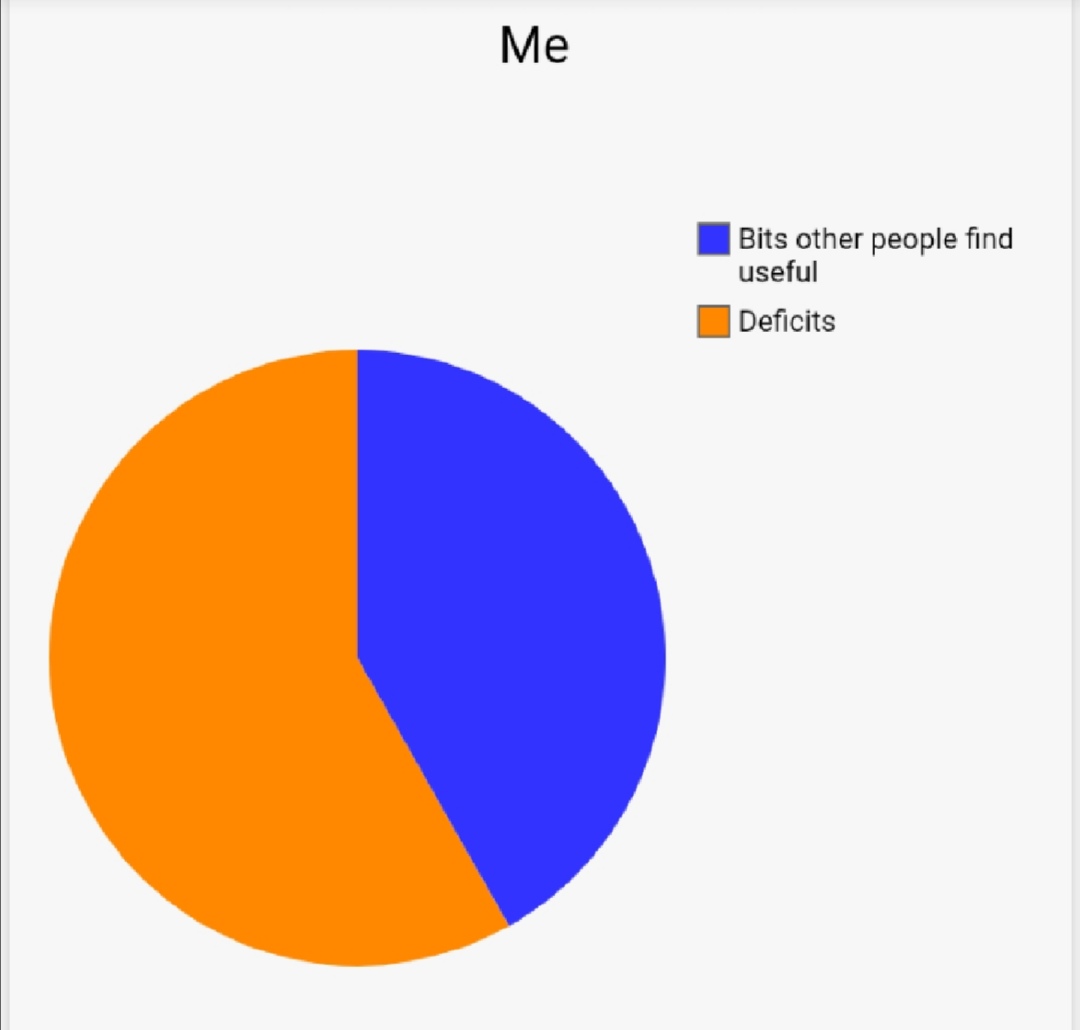

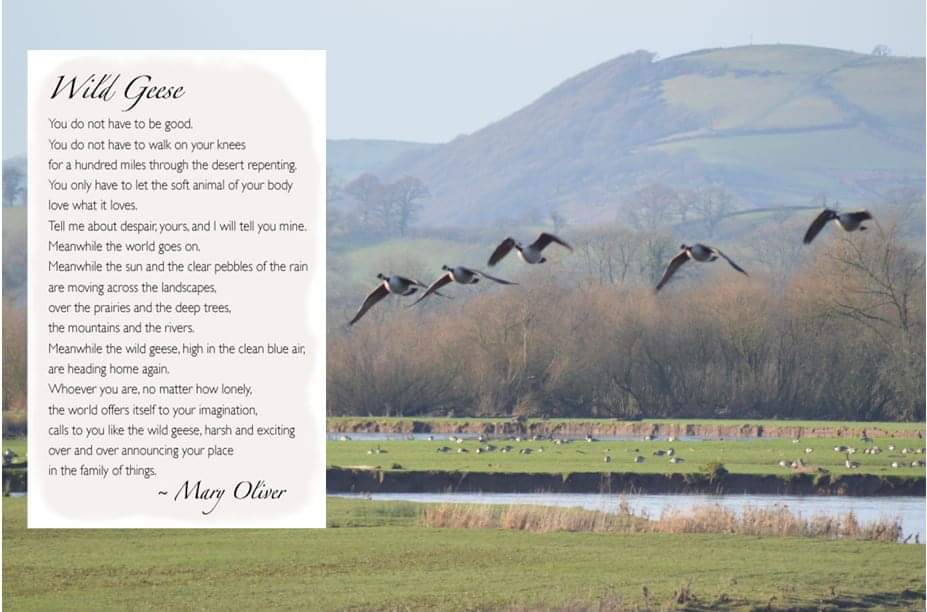
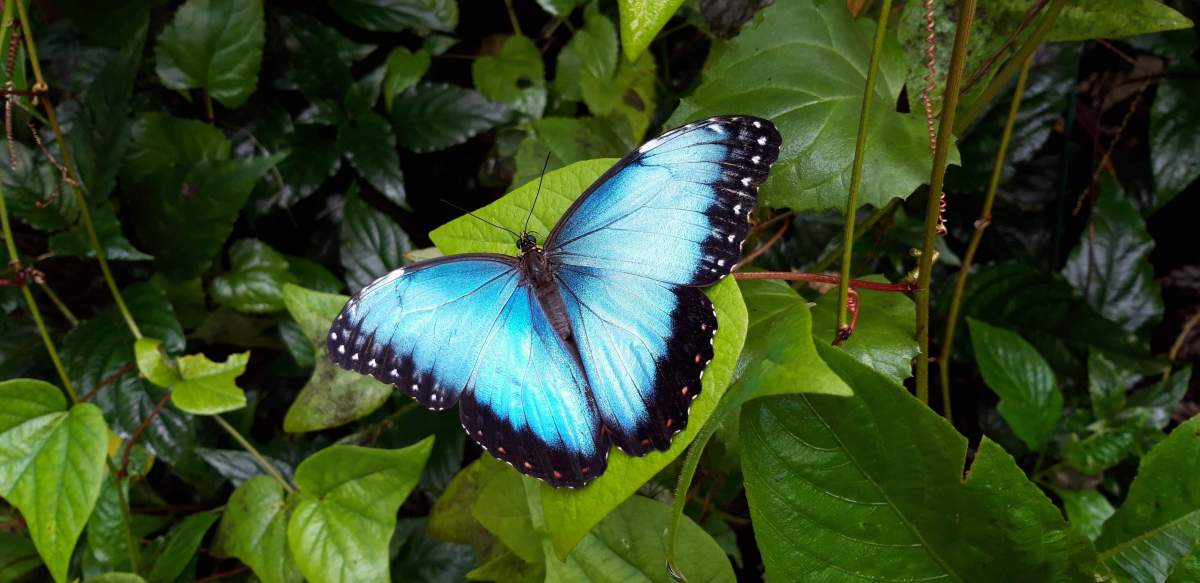

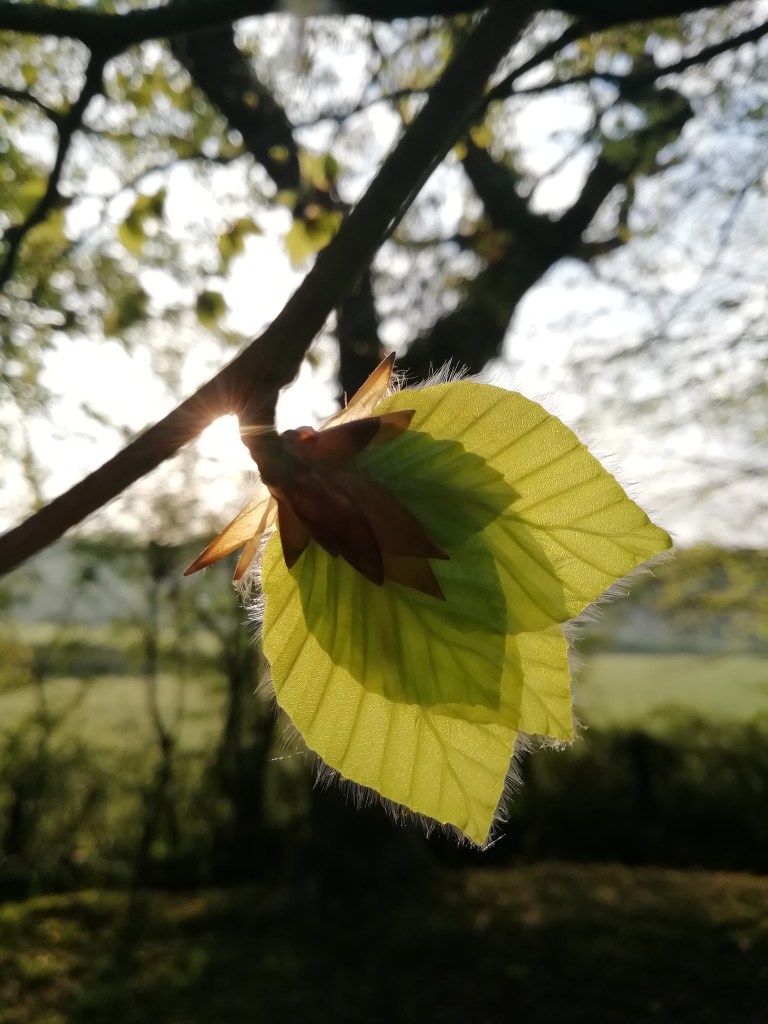

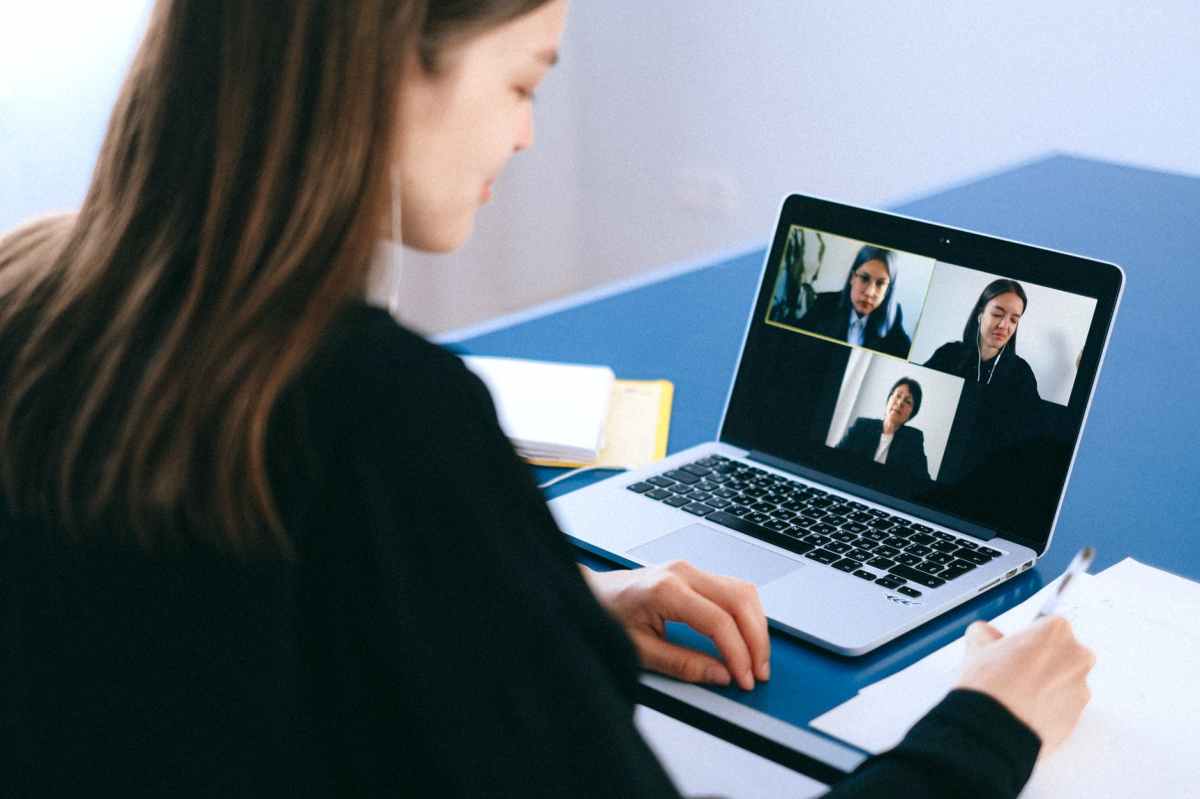





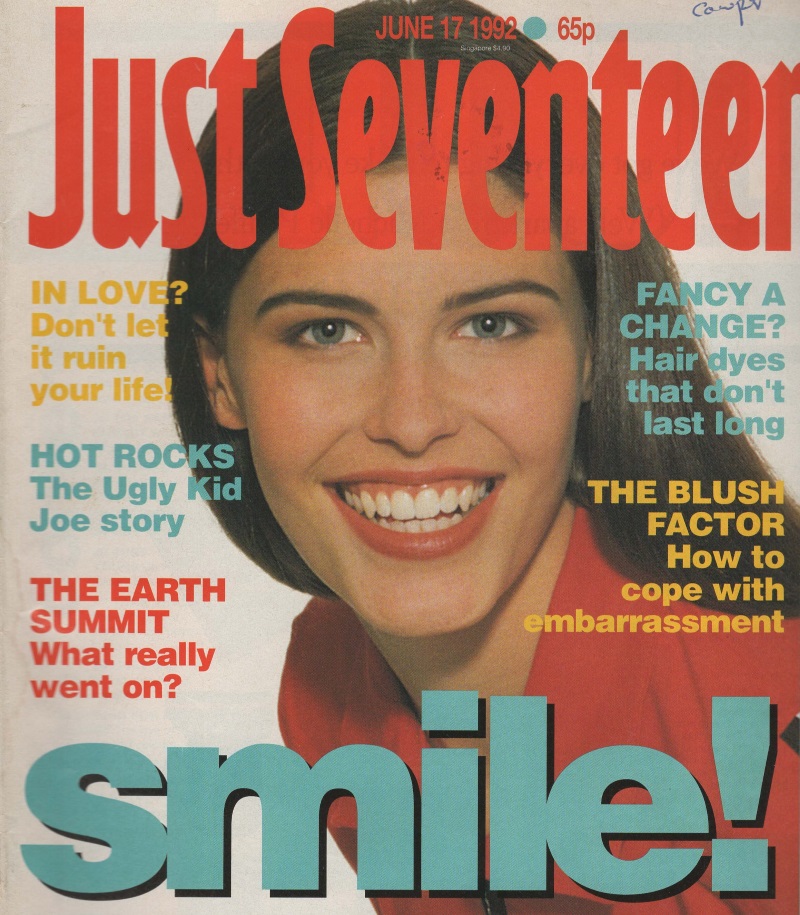







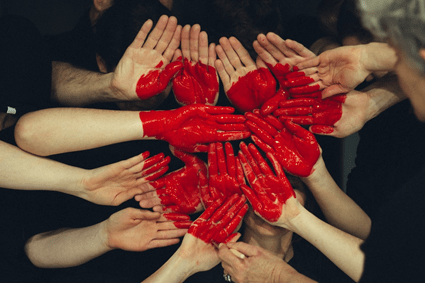
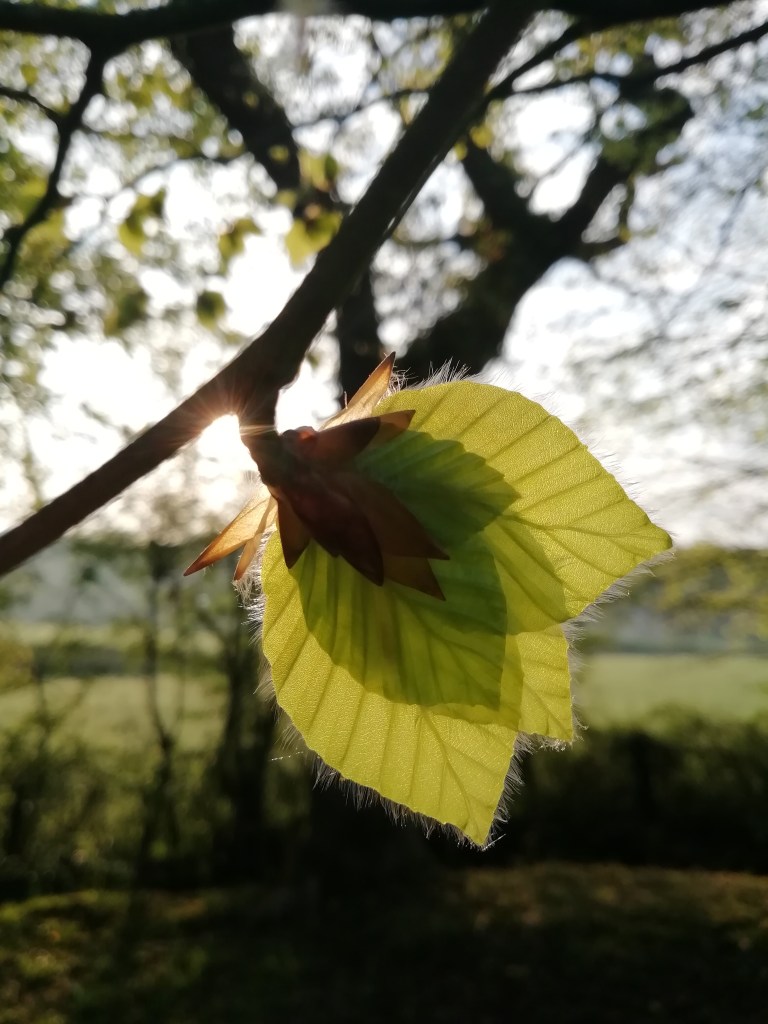


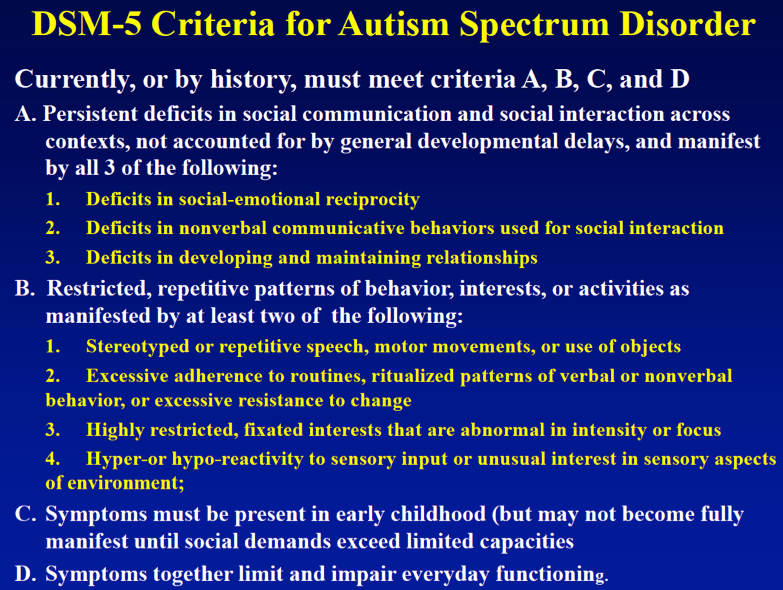


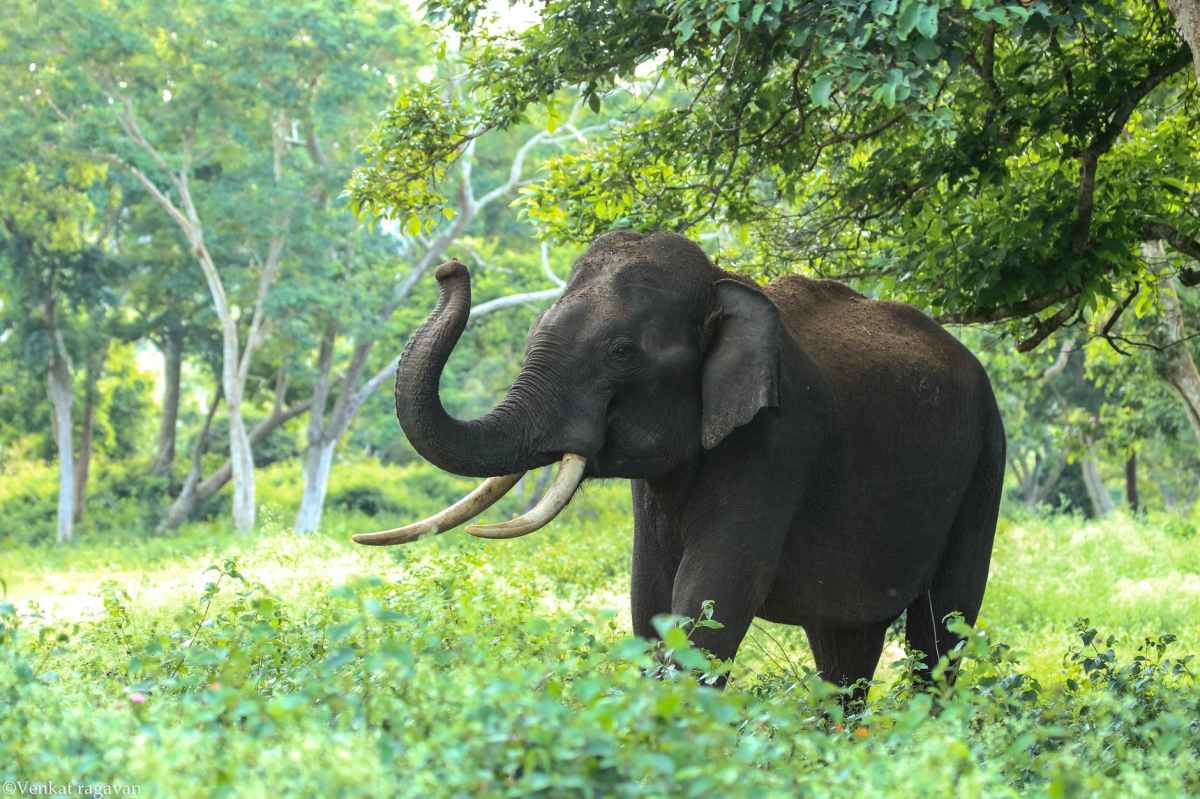



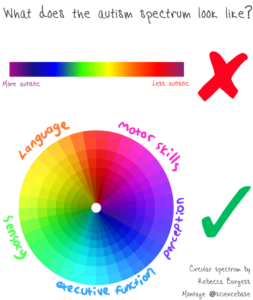

 Undercover Autism