Categories
Autism autism diagnosis Uncategorized

So, you’ve just been diagnosed autistic!

“Please find attached your assessment report. As we have discussed, the report is written in a diagnostic format, focusing on aspects of you as opposed to the whole of you and your life story thus far”, stated the follow up email, from the follow up appointment, from the clinician who was part of the multidisciplinary team that assessed me for autism….

It was many years ago that I attended my assessment follow up, but I still recall the nauseating anxiety as the ‘big reveal’ day approached. I knew I was autistic, my child was autistic and I’m so like them, I HAD to be autistic surely? But what if they got it wrong? What if my gender, my past psychiatric history, those traumatising life events I’d experienced, got in the way and overshadowed my innate neurology?

My follow up appointment confirmed a diagnosis of autism (level 2). Additional sensory processing difficulties were also noted, along with my past history of anxiety, depression and trauma. The report gave the opinion that some of my previous psychiatric labels were likely to be misdiagnoses and argued that some of my mental health symptoms might be better understood in the context of autism and sensory processing differences.

So how did it feel to finally get this diagnosis of autism? In fact it was the 22nd diagnosis I’d received that is listed in the Diagnostic and Statistical Manual of Mental Disorders (DSM-5). Well, I felt ‘kind of something’ that I couldn’t quite describe – but this is normal for me, my autistic interoceptive experiences are often difficult to locate, label and explain. (Interoception is our sense system that picks up and processes body signals including pain, emotions, tiredness, hunger etc etc. Like our other sense systems, autistic people often experience sensory input differently – input may be heightened or muted, distorted, fragmented, delayed, synaesthetic, or otherwise different to that of people who are not autistic.)

Other newly diagnosed people express a whole range of human emotions when first diagnosed, including feeling nothing at all; feeling something intense; feeling validated, vindicated, relieved, terrified, angry, scared, joyful; or a few or all of these emotions; or something else entirely. Each person’s experience will be as unique as they are. There is no “right way” to feel or process the information that you are autistic.

I just received an autism diagnosis, so why do I feel bad?

Whilst a diagnosis of autism may be validating and a relief, it can feel painful to listen to or read a list of what you find difficult. Afterall, the diagnostic criteria is largely a list of deficits – medics don’t diagnose conditions based on an individual’s strengths!

It may hurt deeply to hear loved ones describe you in ways that feel derogatory or that misunderstand your motives. An assessment report or feedback from a clinical team may feel harsh and intense and I recall feeling ashamed of how much I struggle and how often (I perceive) I have ‘failed’. My assessment report sets out my challenges in black and white – unequivocal, harsh, embarrassing, dispiriting. My report states: “Emma manages daily life exceptionally well despite her impairments, she works hard to compensate for her difficulties which prevent them being even more significant than they are.” It felt good to read that my efforts were recognised – virtually all autistic people I have met and worked with, put in huge amounts of effort to get by and survive in a world that so often feels alien and hostile towards our neurotype. I amaze myself that I can keep going sometimes!

It was important to recognise that my assessment report was a synopsis of how I met the diagnostic criteria for autism. My achievements weren’t relevant. My efforts weren’t relevant. My exhaustion from doing my best wasn’t relevant. I have written more about the diagnostic criteria in other blogs . I like to think about my autism assessment like I do the car driving test – an artificial situation that you hope to do only once; that is largely dependent on your performance on the day, that scrutinises only specific areas, and is largely irrelevant to how you actually drive the rest of the time.

On receiving my typed report, I immediately noted a few (minor) inaccuracies that screamed from the pages. I recognise now that I was a simply one human, being assessed by other humans, and the assessor’s interpretation of situations I’d described was as affected by their biases as I am by my biases. It felt difficult though, when reading certain aspects of the report which led to those all-familiar feelings of being misunderstood. Of course, my eagle eyes were working at their sharpest when reading my report, on account of the expectation and anxiety that sharpens your senses and increases your vigilance when under threat – in fact, like all animals in a survival situation, I was tuned in to perceived threats and unable to pick up on cues of safety – and don’t think any typos escaped my keen observation! I’d recommend to anyone receiving the outcome of their assessment, to structure your time in the subsequent days so that you can do whatever self-care works for you and that will help with processing all the information. I have written about autistic self-care in other blogs.

Several years later, I can read my assessment report and feel very little. It doesn’t trigger me, and I have had time to process its contents in my own way. Processing, as the name suggests, is a process! I have thought and felt a variety of things about my diagnosis over the years, and no doubt will continue to do so.

Why did my new diagnosis of autism feel so good?

Quite simply, because I felt seen for who I am. For me, a person with multiple psychiatric diagnoses, some accurate, some questionable, my autism diagnosis explained how I experience the world and offered me a lens through which to revisit every life experience I’d had. My diagnosis made sense. It felt right – and as someone who likes things to be accurate, this was hugely important. My previous diagnoses had never felt 100% right. Sure, some of them resonated – anxiety and depression, for instance – they explained ‘what’ was going on, but not ‘why’ I kept finding myself in the midst of them. Other past psychiatric diagnoses seemed completely off target and almost the opposite of my lived experience. My autism diagnosis meant I felt validated. I almost felt like shouting to the world, “see, this is why I find everything so bloody difficult!”

Now that the outcome is sinking in:

It is normal to think and feel differently about your diagnosis as time moves on. Some people may never feel anything significant about their diagnosis. Other people may wish for the diagnosis to be taken away. Expectations about future support and understanding following diagnosis may be realised – or sadly as is so often the case, there is little support out there unless you are in crisis.

Here are some questions and scenarios that newly diagnosed people may ask or share, and some responses (responses are based on my personal and professional experience and are not recommendations).

Should I tell my family/my school/my workplace?

It’s up to you! Some people feel a need to tell the world they are autistic but there is no obligation to. You may choose to tell no-one. You may decide to share your diagnosis on a case by case basis. You might decide to blog about it and tell the world, like I did!

I’ve been told by friends/family/colleagues that I don’t seem autistic…

This is unsurprising in some ways because often people only learn about autism through the media and stereotypes. People may be comparing you to the only other autistic person they know e.g. a friend’s child. They may be unaware of how much time you spend masking in order to stay safe. There is no right way to respond to this situation and it might help to join online communities or find local peer support groups to discuss this with. I find that often people say this as a compliment, they are trying to be kind – but of course, it doesn’t feel like a compliment and can be invalidating. Whether you challenge people on this or not is up to you. I rarely do, but I am in quite a privileged position where I am usually taken seriously.

Aren’t we all on the spectrum?

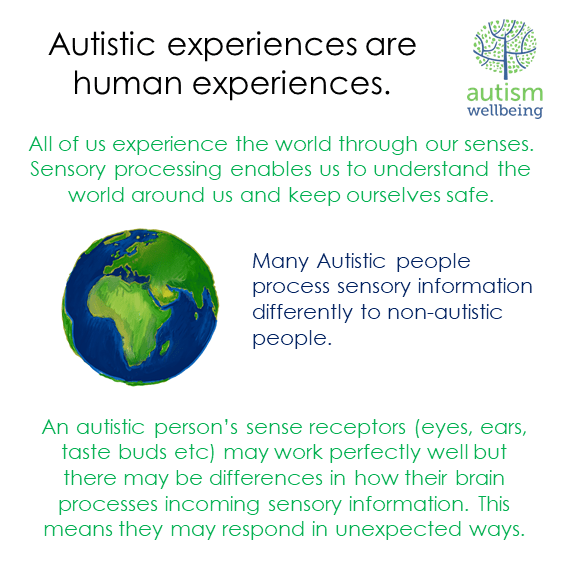
No. You may like to read this earlier blog or recommend it to people. Autistic experiences are human experiences. Most people understand what it is like to be so overwhelmed by your surroundings you can’t think straight; or to have your anxiety reduced by carefully planning your day; or understand the joy in hearing a tune so beautiful you can’t help but move. When we shift our thinking from “aren’t we all a bit autistic?” to “no, but we are all human” it can prompt us to recognise the inequalities autistic people face and question why some people experience distress and difficulty so much of the time compared to their non-autistic peers.

Here are three examples of common human experiences that autistic people may experience more frequently and more intensely due to the world not offering enough opportunities for inclusion:

1. It’s too noisy to think straight.

Autistic people may need to wear noise cancelling headphones or ear defenders to cope with everyday background noise, because our brains may not filter sound. It can feel overwhelming and panicky and we may be unable to focus on, or even work out what is important. Non-autistic people may recognise these types of feelings when trying to park their car when it’s raining heavily, the kids are chatting in the back of the car and the radio is on loud. Typically, they may ask the kids to be quiet or turn down the radio so they can find a parking space. (Note that a reduction in auditory input, frees up visual processing capacity. Our sense systems work together and noise cancelling headphones/ear defenders may be useful for reducing sensory input in many situations, not just ones perceived as noisy) It may help understand me better if you consider that my “normal” when it comes to noise, is like your “parking in the rain with the kids screaming and the radio blaring”.

2. You look like you’re over-reacting.

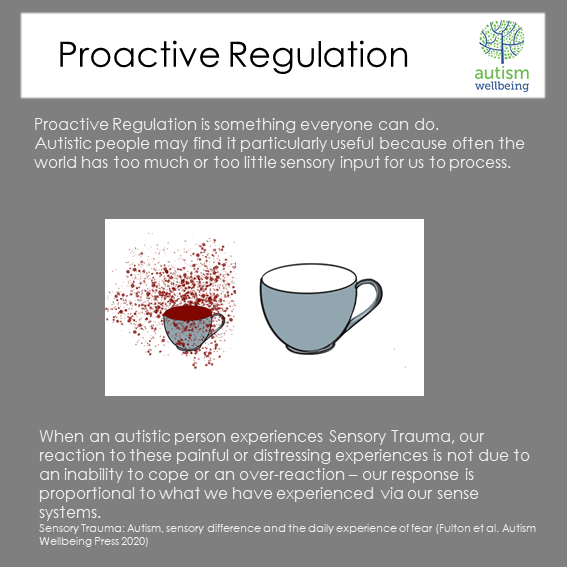
All humans find that our sense sharpen when we are anxious. Autistic people’s senses may often be sharpened on account of our different neurology. A survival response of fight/flight/freeze is not a choice, but proportionate to what our brains perceive. It certainly isn’t an over-reaction. If we are home alone at night feeling anxious and suddenly hear an unexpected noise in the house, it is likely to cause us to jump and may seem louder than the same noise during the daytime when we are busying about and there is an abundance of background noise.

3. A change of plan feels the last straw.

Most of us can relate to feeling deeply disappointed at a change of plan. Again, we need to consider proportionate responses. If I am distressed because you are five minutes late, it is not an overreaction and may be because to me, five minutes feels like 20 minutes does to you (I like to think the ‘sense of time’ is a human sense system too, maybe we could name it chronoception?). Maybe it’s because my imagination knows no bounds and I can think up infinite reasons why you may be late, but have no gut feeling about which of those reasons may be accurate. Once you are a few seconds late, I have no way of knowing when you may come and how this might impact our plans and the rest of my day – and planning my day is important because it provides some predictability to an otherwise chaotic experience. You’d probably be distressed if your holiday of a lifetime was cancelled. I may value my hobbies and interests as highly as you value your holiday, and feel just as distressed if my plans were changed.

Will I get more support at work/school now?

Perhaps. Not every school or workplace is equal in terms of reasonable adjustments and support that may be offered. Legislation is in place to ensure disabled people are not discriminated against but we know the reality is that often employers and educators feel helpless in terms of their understanding of autism and how to best support people. There are organisations that specifically support people in education and employment, they may be able to offer bespoke or more general support.

Why have I suddenly become more autistic?

It seems quite common for newly diagnosed people to embrace their diagnosis and reduce some of the conscious masking they have done. Those self-soothing habits I used to suppress, like rocking from side to side when waiting in a queue, felt permitted once I was formally told I was autistic. None of those “more autistic” things were fake or put on, I felt validated and “allowed” to be more authentic. I accessed a newfound confidence and was able to be more myself. Other people may have perceived this as me playing on my diagnosis, or they may have attributed some other motive to what they perceived as my out of character or exaggerated behaviour. I do recall appearing “more autistic” at first after my diagnosis, but it has settled now. This book was useful to me and I’ve recommended it to others.

It’s not fair. I’ve been bullied, misunderstood and treated badly, simply for being myself.

Correct – it’s not fair, and this may feel doubly harsh because autistic people so frequently call out injustices. Fairness seems important to many autistic people.  I have been working on cultivating compassion and self-compassion. It’s not easy when your life has been full of mistreatment and a continuous stream of micro-invalidations. (I use the word micro-invalidation to mean those comments that usually start with “no-one else is…” and end with something related to our way of experiencing the world e.g. “complaining about the food/lights/noise/moving about/not paying attention/forgetting their book”).

I’d like to say that I don’t dwell on the negatives, but with a brain that can hyperfocus, seek solutions to problems, and ruminate on injustices with the strength of superglue, it is not easy to unstick these type of thoughts. Many of us could have felt intense shame for how we are, we may have internalised stereotypes and negative ideas about autism and find self-compassion is an alien concept. As I’ve processed my diagnosis, re-evaluated my life through the lens of autism, and got to know myself more deeply, I feel more at peace. Again, it is a process.

I’ve moved through experiencing validation and relief, to finding disappointment that the world is still as tough as ever post-diagnosis. I’ve felt proud to be autistic, embarrassed to be autistic. I’ve chosen to mask my autism when it’s less costly than being open about it. I’ve felt angry at the bullies, angry at the medics who repeatedly got it wrong, angry at society for having an accepted culture of mocking differences. Writing helps me process things, so I’ve written lots. I am bringing up my child to be unashamedly themselves.

What can I do to make life easier?

It can be a harsh realisation when you recognise that the world continues to be a challenging place to exist. Here is a non-definitive list of ten things that may make life easier:

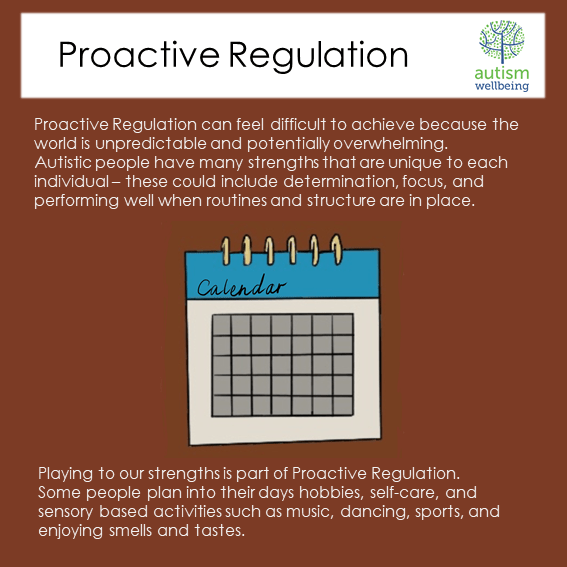
  1. Play to your strengths and use your need for routine, your ability to hyperfocus, your incredible eye for detail, or whatever your strengths may be to have a fun and fulfilling life.
  2. Don’t feel you have to tell anyone you are autistic unless you choose to.
  3. Don’t feel you have to hide you are autistic either.
  4. Explore your sensory profile. Those sensations you seek out or avoid. Plan regulating sensory experiences into your day. These are experiences that help you feel balanced and at your best. I find walking, stretching, using headphones, stroking soft material, crunching crisps, all help me be regulated.
  5. Consider creating a one-page document that lists how others can help you best. You may like to share it with work/school, hospital staff, group leaders etc. If you are stuck for ideas, leave a comment and I’ll share some examples you might like to adapt.
  6. Be proactive with your self-care and self-regulation.
  7. Read, watch and learn about autism from other autistic people.
  8. Be kind to yourself. This can be tough if you’ve felt there was something wrong with you prior to realising you’re autistic.
  9. Find out about reasonable adjustments at school and work and consider what may help you. Internet searches will bring up many organisations that have free resources. Here’s a link to an employment event where I delivered a workshop for the National Autism Team in Wales.
  10. You don’t require a formal diagnostic assessment and diagnosis to be autistic. Afterall, you were autistic before you got your diagnosis. Assessment is not available to everyone, for a variety of reasons, or you may simply choose not to pursue a diagnosis by this route.

Categories
5 minute read Autism identity interoception sensory trauma Uncategorized

Making sense of feeling unsafe

A blog about mental health, emotional distress, autism and hope.

I feel like I am unravelling. Thoughts are like words outside my head. My body seems to be somewhere else. Where “I” end and everything else begins seems fuzzy, fluid, and fucked up.

Am I in pain? I don’t know.

Am I upset? Not sure.

What do I want and need? No idea – and please stop asking all those difficult questions!

I’ve had a tough few weeks that culminated in a car crash a fortnight ago. The hospital scans show that thankfully, I have no broken bones. My bruises reveal I am injured. My sensory processing indicates something is very, very wrong and I must prioritise self-care.

The one question I can answer is “Do I feel safe?”

My answer is a resounding “NO!”

My lived experience of mental illness, emotional distress and sensory processing differences, is one of fear, uncertainty and feeling very, very unsafe. As an autistic person, my experience of the world tends to be chaotic and unpredictable at the best of times and when I factor in traumatising events, illness and injury, the chaos goes up a level!

Sensory Processing

All of us experience the world through our senses. In addition to the five senses that are involved in processing sensory information coming into our bodies from outside: touch, taste, hearing, sight, and smell, we have three more sense systems: our proprioceptive, vestibular and interoceptive sense systems.

Our proprioceptive sense system is used to process where our body is in space and where our limbs are in relation to each other. Try this… Close your eyes, put one arm out straight in front of you with your thumb up. Then, keeping your eyes closed, reach out with your other hand and arm and grab that upright thumb. How you perform is based on your personal experience of proprioception in that moment.

Our vestibular sense system is used to process the effect of gravity on our body. Some of us love a rollercoaster, some of us feel queasy on a calm sea.

Our interoceptive system is used to process emotions. These emotions are grouped into homeostatic emotions which include tiredness, hunger, pain, needing the toilet, and our other internal states; and affective emotions which include anger, excitement, fear, joy and all those other feelings we experience.

The way we experience sensory input depends on our unique sensory profile – those sensations we enjoy and seek out, and those we dislike or avoid. Autistic people tend to have sensory differences because although our sense receptors (eyes, ears, skin etc.) could be working fine, our brains frequently find there is too much or too little sensory information to register. This means we may experience sensory input in heightened or muted ways.

How we experience emotions will depend on how we experience interoceptive signals. For some of us, some of those interoceptive signals may be muted – perhaps we don’t notice we are hungry until we are so ravenous, we can’t stop eating. Or perhaps we might – like me – try and walk off a dislocated knee as it twinged a bit but surely couldn’t be anything serious! If we experience interoceptive signals in a heightened way, a small amount of pain may be unbearable or we may always feel like we need the toilet, even when we don’t physically need to go.

Like most autistic people, I tend to experience sensory input differently to non-autistic people. My personal sensory profile is typically one of muted proprioception and interoception, whereas my sense of hearing and smell are often heightened. But this varies, just as it does for all of us. If I have a lot going on, my muted proprioception gets even more muted and I’ll find myself bumping into doorways even more than I usually do. My hearing may get even more heightened and human speech pierces my ears with pain and vibrations that make me respond as if I am being tortured.

My personal sensory experiences are like most peoples (autistic or not) – variable – and dependent on how I feel, who I am with and what is going on around me. Sensory processing is dynamic. This may sometimes be misinterpreted as the autistic person over-reacting or deliberately being oppositional, especially when on one day they may tolerate a sensation e.g. the noise of the dishwasher being unloaded, but find it painful the next.

When my wellbeing is poor, when I am ill or stressed or already processing too much information, my sensory experiences become more extreme – even by my own standards. Unsurprisingly, the events of recent weeks have resulted in my brain having way too much to process, and my sensory processing experiences have let me know all about it!

How might this look?

Most people are probably unaware that our brains are constantly working away in the background, fine-tuning sensory information. We need a balance of sensory input to be at our best and to learn and take part in social interactions. This seems so obvious, it hardly needs saying, but for those of us who often find there is often too much or too little sensory information, life can be more difficult. Those of us who are autistic are likely to experience differences in how we process sensory information. In addition to experiencing heightened or muted sensations, our processing of sensory information may be distorted or delayed or fragmented. Some sensory information may perseverate or stick around repeating itself long after the event has passed.

Here are a few examples from my lived experience:

  • People’s faces look distorted when I’m walking around a crowded shopping centre. Like their facial features are melting.
  • I can still hear the school bell in my ears and feel the horrible sensation in my body at 6pm, even though it went off to signal the end of the school day at 3.30pm.
  • Synaesthesia – I see musical chords as colours, and numbers as coloured shapes. Always.
  • When I am very upset or have had a shock (e.g. the death of a family member), I don’t feel sad but my vision gets patchy and I can’t see my fingers when I am trying to use my phone. I might “feel” sad months later. This can be misinterpreted as me not letting things go – when in fact, I am only just feeling them.
  • If I am overwhelmed, I feel seasick when walking and cannot bear to slow down, speed up, or change direction as I feel I may vomit.
  • I hear “echoes” of previous conversations replaying out loud when I sit quietly.
  • I cannot tell where my body ends because my proprioception is so muted. I may unknowingly invade other people’s personal space or fail to recognise my own body in the mirror.
  • I hear my thoughts and they seem to become “out loud” rather than inside my head.
  • I feel edgy, suspicious and on high alert.
  • I want intense pressure, and even pain. My body craves intense and extreme physical input. This can be misunderstood as me being reckless.

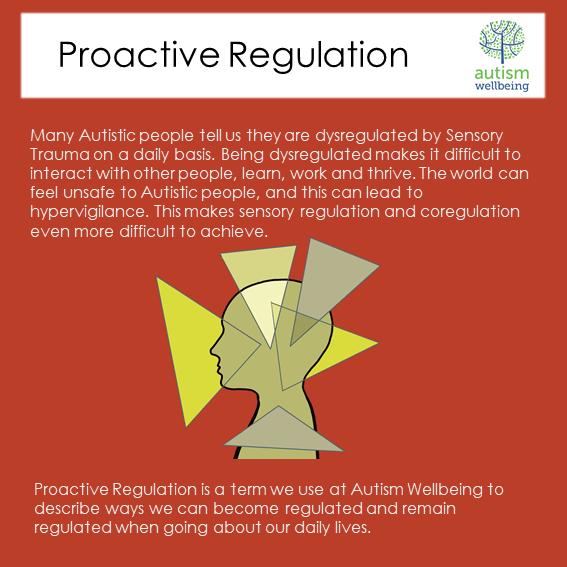
When there is far too much or far too little sensory input to register with our brains, we become dysregulated.

How we up and down regulate ourselves will depend on our own personal sensory profile – and whatever else is going on for us at the time. As an autistic person, I often find that there are fewer opportunities to regulate myself in daily life, due to my natural sensory differences. If I enter a busy shopping centre, my brain finds there is way too much of everything and I could easily become overwhelmed. If I instinctively regulate myself by stretching, or bouncing up and down, or by humming a noise that drowns out some of the unpredictable background noises, I may be at risk of being asked to leave due to my inappropriate behaviour. Read more about this in my blog ‘ Autistic traits: when self-care gets pathologised ‘.

Sensory or Psychosis?

Some of the descriptions of my lived experience may sound like hallucinations or symptoms of psychosis, and for many years my undiagnosed autism was treated as mental illness.

Things get tricky when we try and unpick what is going on for autistic people who are distressed. It is known that autistic people are more likely to experience mental illness than our non-autistic peers. It hardly seems surprising when the world we experience is often more painful and extreme due to our sensory processing differences. It is also unsurprising when we consider how our lived experience is often invalidated with comments about us “overreacting” to things other people aren’t even aware of.

Learn about Sensory Trauma www.autismwellbeing.org.uk/sensory-trauma

If we have seen ourselves as mentally ill and our sensory experiences as symptoms of psychosis then we may perceive ourselves to be deteriorating or experiencing a relapse when we are experiencing sensory overload. Of course, autistic people can be mentally ill and experience relapses and those of us who have support in place to manage those times should always seek input from the people we trust to help us with our wellbeing. My story of mental illness was one of feeling like I lacked resilience and couldn’t cope, because when the going got tough, my senses got going! For me, an increase in sensory processing disturbances would usually result in an increase in antipsychotic medication. However, whilst medication dampened down some of my distressing sensory experiences, it also dampened my joy.

For anyone reading this who is beginning to question their own mental health and medication, I urge you to talk things through with someone else before considering changing your treatment. I did gradually change my treatment, but only once I had found a reliable way of managing my wellbeing effectively. I still use medication for my mental health, but I am also incredibly proactive in keeping myself regulated.

Managing urges to self-harm

Self-harm was a daily part of my life for many years. It is not something I have done for a long time and it is thankfully, something I rarely crave anymore. There are times where the urge is still there, but I no longer feel bad about having those urges. It is unsurprising that I have cravings when it was my “go to” for so long in the past. Just like any other craving or urge, I use it as cue to give my body what it needs.

If I feel thirsty, I use it as a cue to have a drink. I have the choice as to whether that drink is a cup of tea, a glass of water, or 5 pints of beer!

If my legs feel restless, I use it as a cue to go for a walk. I might have a gentle stroll, a 5 mile hike, or a jog round the block.

If I feel tired, I might have an early night – or I might not! The choice is mine.

Sensory processing is what we use to identify what is going on within and around us – and how we respond to it.

When I feel the urge to harm myself, I use it as a cue to increase my proprioceptive input. Proprioception is my “go to” sense when I am craving intense physical input. Proprioceptive input helps us feel safe – that’s why we might enjoy a hug, or squishing our body into a tight space, or wearing snug fitting clothes or doing up our shoes extra-tight so we get a good sense of where our body is. Clinicians often hypothesise over why people self-harm. They quote people as “managing intense emotions” or “a cry for help” or “punishing themselves”. These may well be factors and like many human experiences, there is rarely a single explanation, but no-one has ever described self-harm to me as being due to “needing a big dose of proprioceptive input to make me feel safer”. But for me, and many of the people I have supported in my professional career, some of our self-harm is a very human, very natural craving for proprioceptive input – which makes a lot of sense when you consider our sensory differences.

Proprioception comes from the Latin meaning ‘to know oneself’. That is exactly what this sense does. It gives us a sense of where our body is and where our limbs are in relation to each other.
The proprioceptive signals are sent from our muscle spindles, ligaments and joints up to the brain to be processed. For many of us who are autistic these signals can be ‘weaker’ or ‘blurry’ which can leave us feeling like we have an unclear sense of where our body is.

Humans are complex and our coping mechanisms are complex. Understanding how we respond to distressing situations, whether sensory or otherwise, requires us to be nuanced in our considerations, and a short blog like this one is not able to unpack this level of complexity. My aim was to share how my own responses to distressing life experiences are always impacted by my autism and sensory differences. Identifying which experiences are mental health symptoms and which are not, isn’t always relevant. Being able to regulate myself is what is important. Being regulated helps with wellbeing, whatever the cause of the distress.

Proactive regulation

Proactive Regulation is a term Autism Wellbeing UK uses to describe how we can make sure we regulate our senses and emotions throughout the day so that we can function at our best.

For us, this might include wearing headphones in a busy shop, or carrying a scented inhaler tube to smell to help us feel grounded.

Proactive regulation also means showing ourselves self-compassion where possible, by avoiding or delaying activities that are likely to dysregulate us rather than pushing on regardless. Turning the habit of self-harm into a habit of self-compassion has been as time- and energy-consuming as making or breaking any other habit. BUT…

It has got easier the more I have done it. At first it was about “doing” rather than “feeling”. My brain and body craved intensity and pain and I had to push that to one side while I was compassionate towards myself. At first it felt unnatural, clunky, ridiculous and fake!

Me doing my self-care when it was new to me!!!

Mostly, when I feel distressed these days, I automatically see it as a cue to do some self-care, show myself compassion, and regulate myself. I even feel able to reach out to others that I trust. Here are some infographics about proactive regulation. It is important to be regulated before you need to be, in fact you can stockpile regulating sensory input for later. Just as I described feeling the distressing effects of the school bell hours later, or hearing “echoes” of previous conversations in my quiet moments, I can feel the positive effects of regulating input hours later too. Proactive regulation has been a game changer for me.

Thank you for reading this blog. I was unsure about whether to add trigger warnings as what triggers each of us may be different. Even trigger warnings can be triggering! This blog is one of positive change and hope. If you need help with difficult and distressing feelings raised by this blog, please reach out to someone or contact the Samaritans or other organisations.

Categories
Uncategorized

Autism does NOT reduce your life expectancy – being Autistic does…

Death has been on my mind for most of my life. The uncertainty and relative unpredictability of it has made it an attractive topic for a hyper-focused deep-dive; seeking answers, clarity and a desire to find a crumb of certainty.

Some of those thoughts have led to dark places and some have been refreshingly liberating. It does not surprise me that autistic people are nine times as likely as our non-autistic peers to die by suicide. We are more likely to experience traumatic life events including bullying and adverse childhood experiences. We are less likely to be in work – and it is well known that unemployment increases risk of suicide. Autistic people have higher rates of mental illness. We experience multiple social factors that relate to increased suicidality such as needing to rely on food banks or being isolated and/or lonely.

Suicide is an issue of inequality. Death due to suicide is not evenly distributed across genders, social class, geographical area, and ages. The Samaritans have plenty of data about this – and are a source of support if reading this blog is distressing, or for any occasion where you need to reach out…and do please reach out. There IS support, and suicidal feelings and thoughts can and should be spoken about. It IS possible to get through that moment when you’re desperate or on edge. Talking or texting or emailing can help make sense of feelings and thoughts that seem indescribable, and there is ongoing support out there. You don’t have to be suicidal to seek help.

Suicide is not the only reason why autistic people die younger than our non-autistic peers. Some of the social issues we face like unemployment, poverty and isolation impact our health. Many of us have lived with toxic stress.

A certain amount of stress is essential, but toxic stress in infancy and childhood can lead to increased vulnerability to a range of mental and physical health conditions and health-harming behaviours over the life-course, including depression, anxiety, cardiovascular disease,
diabetes, stroke, alcoholism and drug abuse.

Autistic children are not only more likely to experience ACEs (adverse childhood experiences), their sensory experiences are likely to be different to those of their non-autistic peers and may result in Sensory Trauma.

This combination of factors can lead to us experiencing poorer mental and physical health outcomes, and in itself may be significant in why we have a lower life expectancy than our non-autistic peers. Add to that the difficulties we may have in noticing, recognising and communicating what is happening in our bodies due to our interoceptive processing differences and increased risk of trauma, it does not surprise me that our physical and mental health outcomes are poor.

So what happens if we are able to pick up on what is happening inside our bodies and wish to communicate that to the relevant professionals? It is well recognised that autistic people face numerous barriers when accessing health services.

Research shows that autistic people have high levels of co-occurring mental health conditions, yet a number of case reports have revealed that autistic people get the wrong mental health diagnosis and are less likely to agree with a mental health diagnosis because they didn’t feel their healthcare professional understood their condition or how to communicate with them properly.

An event causing Sensory Trauma to an autistic person may be perceived as inconsequential by non-autistic people in the same environment – if perceived by them at all. The autistic person’s reaction may be viewed as “challenging behaviour”, overemotional, or maybe not even accepted or believed – simply because the event may not be recognised as traumatic to other people. The invalidation and mislabelling that accompanies this may – as in my case – lead to an autistic person doubting their genuine experiences and eventually mistrusting their own judgement and expertise on their health and life. They may avoid seeking help or speaking out about their physical and mental health experiences, or they may not receive the medical treatment they require – or even receive unnecessary and harmful treatments and interventions for conditions they do not have.

A study in Ireland reported 80% of autistic people had difficulty visiting the GP. Whilst people with a learning disability can access yearly GP health checks and liaison nurses in hospitals, the same is not true for autistic people, with large areas of the UK having neither.

Autistic people have significantly lower life expectancies than the rest of the population. A statement from the UK government in 2021 quotes the data reported by the British Journal of Psychiatry that autistic people will live 16 years fewer than their non-autistic peers. Another report compares the range of average life expectancy for autistic people from 39.5 years to 58 years, to the global average of 72 years.

Whilst there are numerous examples of autism’s co-existing physical and mental health conditions, I do not believe research should be focused on identifying whether there is a biological or genetic component to this or not. Too frequently I hear anxiety or some other condition described as “part” of autism and therefore to be expected and accepted. It is time these ideas were challenged. Autistic people, whether they also have a learning disability or epilepsy or gastrointestinal disorder or are like much of the human race – simply average or thereabouts – deserve to have a good quality of life.

We know that epilepsy often co-occurs with autism. We know that people who experience epileptic seizures have a reduced life expectancy. But whether epilepsy and autism share a genetic component that make them more likely to occur together is largely irrelevant to an autistic person’s life (unless you were considering terminating the person before birth, in which case it becomes very relevant). What is relevant is that the person can access the services they need and receive the support they require to understand, self-manage and accommodate their epilepsy. And that will come about by designing services and treatment that meet the needs of a wider range of people. It will come about by welcoming different ways of communicating and believing sensory experiences that are different to those of your own. It will come from adjustments to how society does things, so that more people can take part.

I am waiting to find out why my life expectancy is reduced. It seems ironic that after years of battling suicidal thoughts, I am now being handed death on a plate. I am certain that the mislabelling of my own mental health and the consequent medication has played a major part in my incurable physical health condition. But I cannot escape the trauma (both sensory and event based) I have experienced – the body most certainly does keep the score. The effects of toxic stress on my developing body and mind must have played a part too. The invalidation and gaslighting and self-doubt kept me unwell and unable to seek support. My muted interoception meant I did not always know I was in pain or what it was I was feeling – and my heightened tactile sense system meant I responded completely proportionally to excruciatingly painful light touch, but to others who experienced things differently I was interpreted as over-reacting – both these experiences adding to the inaccessibility of support. Even the design of hospitals and surgeries, and the sensory overload that comes with all that white brightness, and noise makes them inaccessible. When I do step inside, my overwhelm can reduce my ability to tap into the flexible thinking, reasoning and organising I require to navigate the communication requirements of finding the right place, at the right time and telling the right person, the right stuff about me!

This is a sad blog to be writing. Sad for me, yes. Sad for the autistic community. If we were any other marginalised group in society, would our reduced life expectancy be kept so quiet? What if gay people were thought to have had a long life if they made it to 55? Surely society would be doing something these days, even though they may not have in the past. How about if it wasn’t a marginalised group? What if it was white men, like the ones who dominate the research and the institutions involved in researching autism? I am certain there would be uproar and demands to change things. Reaching 60 years old should not be almost unheard of for any group of people, anywhere in the world in this day and age.

This is a complex topic with lots going on. It needs further research that listens to and values the input of autistic people from all walks of life. But I do not think we will find answers by looking inside the bodies and minds of those autistic people to find out what is supposedly “wrong” with them, so we can make them “better”. We need to look more widely and be disgusted and offended and outraged that any group of people is expected to have utterly appalling mental and physical health outcomes that reduce their lives to a fraction of what they should have been.

If you like the photo of the Oak tree please read this blog about aging and usefulness.

.

Categories
Uncategorized

Sensory Trauma and Proactive Regulation

https://www.differentbrains.org/sensory-trauma-and-proactive-regulation/

A blog for US non-profit Different Brains

Categories
Uncategorized

My changing perceptions of challenging behaviour….

https://neuroclastic.com/my-changing-perceptions-of-challenging-behaviour-reflections-of-a-social-care-professional/

Categories
Uncategorized

Autism and Christmas

Sending you all my best wishes…here is a blog I authored for NeuroClastic

Categories
5 minute read Autism Coronavirus interoception Uncategorized

An Autistic experience of the impact of Covid-19 infection on sensory processing

Background:

I contracted Covid-19 for the first time in April 2020. This required a hospital visit which led to my interest in developing resources to support other Autistic people and their families as part of my professional work as a director of Autism Wellbeing CIC.

I received my two doses of the Covid vaccine during the summer of 2021 and was unfortunate to become infected with Covid-19 for a second time in October 2021. My symptoms of early illness did not present in the expected way.

My most recent Covid-19 infection initially resulted in the common symptom of complete loss of my sense of taste and smell. I have regained about 5% of my olfactory and gustatory processing ability six weeks on from infection.

My professional career has been within social care – developing and delivering services to people who are labelled as having complex needs. My own experience of Covid-19 enabled me to reflect upon some of the potential impacts this could have on other Autistic people, and in particular those who use non-verbal communication or are considered to have “challenging behaviour”.

Interoception – knowing I am ill:

Prior to both infections with Covid-19 I noticed a complete change in my demeanour. I did not feel ill. I did not feel hot or cold – although a thermometer indicated I had a fever. I experienced the sudden onset of severe depression-like symptoms. Fortunately, I am aware of how my interoceptive processing experiences manifest. Interoception is the sense we use to process internal body signals such as pain, hunger, or needing the toilet – and to notice our emotions and the changes they are creating in our bodies (racing heart could mean excitement or anger for instance).

The severity of the depression-like symptoms frequently overshadows my attempts to seek medical help for my physical illness. When I seek medical intervention at these times, my physical illness is typically overlooked, and my mental health is scrutinised – despite me articulately and accurately informing medics that I believe I am coming down with a physical illness. This overshadowing of my physical illness due to putting greater emphasis on the risk management or identification of my depression-like symptoms may prolong my illness as my physical health problems are not treated.  It invalidates my experiences and may even create barriers to me seeking support or communicating with medics.

When I consider people I have supported professionally, that are labelled as having “challenging behaviour”, I recognise occasions where perhaps they too may have experienced a sudden change in mood due to a physical illness. Within my work I have observed people exhibiting behaviours such as shouting; biting themselves or others; or running away. These behaviours were considered to be caused by the person trying to communicate that something was wrong and as practitioners we would consider whether this could be something external such as too much noise or the person not wanting an activity to end, for example; or something internal such as toothache or illness.

At times, “challenging behaviour” was interpreted by some practitioners as having an element of intent or wilfulness on the part of the Autistic person. It was sometimes considered that the person didn’t know how to communicate “properly” using speech or sign language or had poor social skills – and therefore chose to demonstrate their pain/distress/urge to leave, by “acting out” and using their behaviour in a planned or possibly even manipulative way to communicate with others.

Where no cause or trigger was obvious to the (usually non-autistic) observer, it was common for the observer to conclude that the person was over-reacting or hyper-responding in some way, and subsequently needed to learn more appropriate coping strategies. My own symptoms of sudden severe depression could look like emotional instability to an observer, and they may well consider me unable to cope with being ill. They may misconstrue that my mood symptoms are a response to my physical illness and not the way that illness manifests for me.

Sensory Processing:

Thank you to my colleague Kate for the drawings http://www.autismwellbeing.org.uk

Sensory processing is the process by which the nervous system receives, organises, and understands sensory information. All of us experience the world through our senses and our brains process this information.

Autistic people frequently process sensory information differently to non-autistic people. Our sense receptors (eyes, ears, taste buds and so on) may work perfectly well but there may be differences in the way our brain processes the sensory information.  This may include struggling to process too much sensory information or filter out unnecessary information; experiencing heightened, muted, or distorted sensory signals; delays in processing; or perception in one or more senses shutting down, resulting in an incomplete picture of what is happening within the body.

Each of us has a unique sensory profile. But sensory processing does not happen in isolation. Our sensory experiences change and can appear inconsistent to others who do not recognise the dynamic and context specific nature of sensory processing.

Our senses play an essential role in keeping us safe. For example, if food smells rancid, we know not to eat it, and if we feel unstable on a structure, we climb down from it. Sensory information tells us how to act in and adapt to the environment. Sensory processing also plays a role in regulation, activating us to evade a threat or calming us so that we feel safe.

Positive and negative aspects of my loss of taste and smell:

  • My overall amount of sensory processing was dramatically reduced. This had a calming and regulating effect upon me and reduced distress in some situations. e.g. the lack of diesel fumes and burger van smells made visits to my local town more bearable.
  • Food never tasted “off”. This reduced the anxiety I typically experience when food tastes different to usual. I used the best before date to identify whether something was safe to eat.
  • Food tasted of nothing – so texture became more intense. I realised that I could never eat broccoli without the “reward” of the taste of it to compensate for the texture!
  • I have practiced mindfulness for decades and found that eating mindfully was the best way to cope with my sudden loss of taste. I would put the food on my tongue and notice it without judgment. At first, the only food I could identify in my mouth was mango, due to the distinctive fizz. I am now aware of spices, bitterness, and the saltiness of marmite.
  • I recognised how I rely on my sense of smell when cooking. It lets me know when to check if the toast needs turning over under the grill and if food is getting close to being cooked. Without the ability to smell my food cooking, I had to focus on following safe cooking procedures and use a timer or else risk burning food.
  • Smell keeps you safe – I no longer felt disgust at cleaning up pet poo, even if I accidentally got some on me! I didn’t automatically recoil from mess or take extra care using bleach or filling the car with petrol as there was no aroma from it and it could have been water as far as I was concerned.
  • I can no longer smell the weather and therefore cannot easily identify whether I should wear a jumper or coat. My sense of smell is more effective than my awareness of temperature when processing the environment.
  • I use my sense of smell to recognise people. Their sudden lack of aroma made them as difficult to recognise as a radical new haircut or significant weight change would. This created a sense of unease within me.
  • I am concerned that I may smell bad, or my home may smell bad.
  • I am aware that I would not smell burning so have become extra vigilant about checking things are switched off at night. I recognise that this vigilance could become anxiety, perseveration, and obsession, so I have adopted a sensible routine to manage my safety concerns without escalating them.

Conclusions:

My sensory experiences following Covid-19 infection have reminded me how our senses work together and not individually.

The role of our senses in keeping us safe is significant. Risk taking may not always be due to recklessness, impulsivity, or lack of understanding of risks – it could occur due to sensory differences.

Autistic people may experience the world in a disorganised or chaotic way because our senses work so differently. My typical need for routine and structure reflects this. Since Covid-19 infection, I am aware that I am relying even more than usual on timers, reminders, and routines in order to compensate for my loss of certain senses. To an observer, Covid-19 may appear to have made me “more” Autistic. It hasn’t; but my “normal for me” world has changed, and I am needing to find security, certainty, and predictability in this new world of minimal smell and taste.

If I was supporting an Autistic person who was not able to articulate their experiences, and they had recently tested positive for Covid-19, I would consider how their sensory processing may have been affected. It would not surprise me if some Autistic people needed to increasingly rely on their other senses to make sense of the world if their sense of smell and taste reduced. They may touch things more to identify them using their tactile sense. They may stim more in order to get extra vestibular and proprioceptive input. I’d expect to see more tasting and smelling of items and people; and possibly increased frustration at not being able to recognise them by these methods.

I would also expect to see an increase in repetitive questioning by some Autistic people. I too have a felt a need to check and recheck information in order to seek out familiarity and predictability. I have found satisfaction in the predictable to-and-fro of scripted or familiar conversations and exchanges. Those reliable quotes from films and songs that stay the same each time you hear them! Similarly, I would not be surprised to see people stuck in a loop of thinking, or stimming, or behaving in a particular way – these tendencies are often exacerbated by change and unpredictability and can provide predictability and a self-soothing function.

Moving forwards, I have prepared myself for a potential return of my sense of taste and smell. I am aware that just like the effects of the various lockdowns ending; a sudden increase of sensory information may be too much for my brain to process and result in survival responses of fight, flight or freeze. I plan to stick with my mindful approach to noticing what my senses are picking up, with no judgment and a curiosity that will hopefully enable me to reflect and share my insights.

I encourage practitioners to consider sensory processing experiences when supporting Autistic people whose behaviour suddenly changes from what is usual for them, and perhaps check whether Covid-19 infection and symptoms related to loss of smell and taste may be the cause.

Categories
Uncategorized

Sensory Trauma interview

It was wonderful to spend some time with Chloe discussing Sensory Trauma. Why not catch our interview on YouTube

Categories
Uncategorized

Autistic Body Language

Here is a blog I wrote that NeuroClastic recently published.

There is a fantastic breadth of autistic experience available on the Internet. Neuroclastic.com is a great source of insights. Why not check their website out, and have a read of my latest blog while you are there.

https://neuroclastic.com/2021/01/06/autistic-body-language/

Categories
Uncategorized

A Brief Christmas Message…

https://m.facebook.com/story.php?story_fbid=2802739203305969&id=1509838305929405&sfnsn=scwshmo